
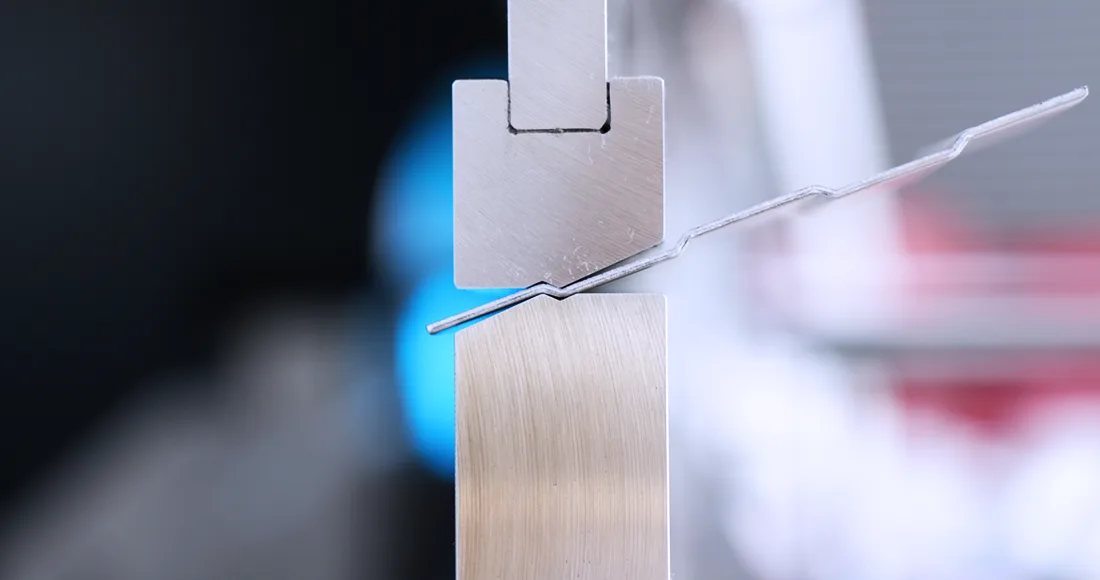
In the world of metal fabrication, precision is not just a requirement; it is the lifeline of your business. As the Editor-in-Chief at KRRASS, and having spent years on the factory floor designing and refining sheet metal forming equipment, I have witnessed firsthand the catastrophic results of miscalculation. I have seen heavy-duty frames cracked, expensive tooling shattered, and production lines halted—all because the operator or engineer underestimated the force required to bend a specific piece of sheet metal. When you are operating brakes hydraulic press machinery, understanding the limits of your equipment is not merely a suggestion; it is a fundamental safety protocol.
Whether you are looking to purchase a new KRRASS CNC press brake or simply trying to optimize your current workflow, understanding tonnage is the most critical skill you can possess. It is the difference between a perfect 90-degree bend and a damaged hydraulic system. In this comprehensive guide, we are going to strip away the confusion surrounding tonnage calculations. We will dive deep into the physics of metal forming, explore the variables that fight against your ram, and provide you with the authoritative data you need to ensure your KRRASS machine runs smoothly for decades. Let’s master the art of tonnage calculation together.
Table of Contents
The Physics of Bending: What is Tonnage?
At its core, “tonnage” refers to the amount of force a press brake’s ram can generate to push a punch into a die, thereby deforming the metal sheet placed between them. When we discuss brakes hydraulic press capacity, we are talking about the maximum load the machine can exert without suffering structural deformation or hydraulic failure. However, just because a machine is rated for 100 tons does not mean you should—or can—apply 100 tons of force to every job.
The Concept of Flow Stress
To bend metal, you must overcome its yield strength. When the punch contacts the metal, it generates stress. Initially, the metal resists this stress (elastic deformation), meaning if you removed the pressure, the metal would snap back to its original flat shape. Tonnage is the force required to push the metal past this elastic limit into the “plastic” zone, where the deformation becomes permanent.
This transition point varies significantly depending on the material. For instance, mild steel flows differently than stainless steel or aluminum. The tonnage calculation is essentially an equation attempting to predict how much force is required to break the material’s structural resistance at a specific point, defined by the tooling you choose.
Concentrated Load vs. Distributed Load
A common misconception among new operators is that tonnage is a static number available anywhere on the bed. This is false. A 200-ton press brake typically offers that force distributed across the entire length of the bed. If you attempt to use full tonnage on a small, 6-inch part in the center of the machine, you risk “center loading.”
Center loading causes the ram and bed to deflect (bow) in opposite directions. While KRRASS machines are engineered with high-rigidity steel frames to minimize this, exceeding the tonnage-per-foot limit is a primary cause of permanent machine damage. Therefore, our calculations must always account for not just total force, but force per unit of length.
The Four Pillars of Tonnage Calculation
Before we plug numbers into a calculator, we must understand the four distinct variables that dictate the required force. If you change any one of these variables, the tonnage requirement changes drastically.
1. Material Tensile Strength
The type of metal is the starting point. The harder the material, the more force is required to bend it. We generally use Mild Steel (with a tensile strength of roughly 60,000 PSI or 42 kg/mm²) as the baseline for all calculations.
If you are bending Stainless Steel, which has a much tighter molecular structure and higher yield strength, the required tonnage increases by approximately 50% to 60%. Conversely, soft Aluminum might only require 50% of the force needed for mild steel. Ignoring the material multiplier is the fastest way to stall your brakes hydraulic press.
Table 1: Material Tensile Strength Multipliers
| Material Type | Avg. Tensile Strength (PSI) | Avg. Tensile Strength (N/mm²) | Tonnage Multiplier (Base: Mild Steel) |
|---|---|---|---|
| Aluminum (Soft) | 30,000 – 35,000 | 200 – 240 | 0.50 |
| Aluminum (Hard) | 40,000 – 45,000 | 275 – 310 | 0.65 |
| Mild Steel (CR) | 60,000 | 420 | 1.00 (Baseline) |
| Stainless Steel (304) | 85,000 – 90,000 | 600 – 620 | 1.50 – 1.60 |
| Chromoly | 100,000+ | 700+ | 2.00+ |
2. Material Thickness (T)
This variable is exponential. If you double the thickness of the sheet, you do not simply double the required tonnage; the requirement effectively quadruples in many scenarios, depending on the V-die opening.
In the industry, we refer to thickness as “T”. As T increases, the volume of metal that must be displaced at the bend radius increases. For heavy-duty applications found in shipbuilding or heavy machinery—sectors often served by KRRASS brakes hydraulic press solutions—even a variance of 1mm in plate thickness can alter the required force by dozens of tons over a long bend.
3. Bend Length (L)
This is a linear relationship. If it takes 10 tons to bend one foot of steel, it will take 20 tons to bend two feet of the same steel (assuming the thickness and tooling remain constant).
However, the complication arises with the machine’s limit. If you have a 100-ton machine and you need to bend a 10-foot sheet that requires 12 tons per foot, the total required force is 120 tons. This job is impossible on that machine, and attempting it will stall the hydraulics or trip the overload protection valves.
4. The V-Die Opening (V)
This is the most controllable variable for the operator. The V-die opening is the width of the bottom die. Think of the V-opening as a bridge. A wider bridge (larger V-opening) makes it easier to bend the plate because you have more leverage. A narrower bridge (smaller V-opening) requires significantly more force to push the material down.
Changing the V-die is the easiest way to manipulate tonnage requirements. If a job is maxing out your machine’s capacity, switching to a larger V-die can reduce the tonnage load, albeit at the cost of a larger bend radius.
The Anatomy of the V-Die Selection
Before we get to the math, we must select the correct V-die, as the formula relies on this value. Using the wrong V-die is a common error that leads to inaccurate calculations.
The Rule of 8
For mild steel, the industry standard “Rule of 8” applies. This rule states that the V-die opening should be 8 times the material thickness (V = 8T).
- Example: If you are bending 2mm thick mild steel, you generally use a 16mm V-die (2mm x 8).
However, this rule shifts as thickness increases or decreases:
- Thin materials (under 1mm): Often use 6x thickness.
- Standard materials (1mm to 10mm): Use 8x thickness.
- Thick plates (over 12mm): often use 10x or even 12x thickness to reduce the immense tonnage required and to prevent the material from cracking.
The Inside Radius Correlation
The V-die doesn’t just dictate tonnage; it dictates the Inside Radius (IR) of the bend during “Air Bending” (which we will discuss in detail in the next chapter). In air bending, the inside radius forms as a function of the V-opening.
- The formula: IR ≈ V / 6.
If you choose a larger V-die to save tonnage, your inside radius will get larger. If the customer’s drawing demands a sharp, tight radius, you are forced to use a smaller V-die, which inevitably drives the tonnage requirement up. This is the constant trade-off a brakes hydraulic press operator must manage: Radius Quality vs. Machine Capacity.
Editor’s Note: At KRRASS, we often advise customers to purchase a machine with 20% more capacity than their “standard” daily job requires. This buffer allows for the use of smaller V-dies when tight radii are required without overloading the system. You can learn more about machine sizing by referencing authoritative guides such as those found on The Fabricator.
The Mathematical Formulas: Calculating the Force
Now, let us get into the actual math. There are several formulas used in the industry, but for general “Air Bending” of mild steel, the following standard formula is universally accepted for its accuracy and safety margin.
The Metric Formula
For those of our global clients operating in metric units (mm, tons), the formula is:
$$P = \frac{650 \times S^2 \times L}{V} \times \frac{TS}{42}$$
Where:
- P = Required Force (Pressure) in kiloNewtons (kN) or Tons (approximate depending on conversion). Let’s simplify for standard Tons:
- P (Tons) = $\frac{1.42 \times T^2 \times L}{V} \times \text{Material Factor}$
Let’s break down a simpler, shop-floor ready version:
$$F = \frac{K \times L \times T^2}{V}$$
Where:
- F = Tonnage required (in Tons).
- K = A constant multiplier for material (typically 1.42 to 1.45 for Mild Steel in metric calc).
- L = Length of bend in meters.
- T = Thickness of material in mm.
- V = V-die opening width in mm.
The Imperial Formula
For our clients in North America using inches and US tons, the formula looks like this:
$$Tonnage = \frac{575 \times T^2 \times L}{V}$$
Where:
- 575 = A constant for Mild Steel (assuming approx. 60,000 PSI tensile).
- T = Material Thickness (in inches).
- L = Length of the bend (in feet).
- V = V-die opening (in inches).
A Practical Calculation Example
Let’s imagine a scenario. You have a KRRASS brakes hydraulic press in your workshop. You need to bend a piece of Mild Steel.
- Thickness: 1/4 inch (0.250″).
- Length: 10 feet.
- V-Die: We will apply the “Rule of 8”. So, 0.250 $\times$ 8 = 2.0 inches.
Let’s apply the Imperial formula:
- Square the Thickness: 0.250 $\times$ 0.250 = 0.0625
- Multiply by Constant: 0.0625 $\times$ 575 = 35.9375
- Multiply by Length: 35.9375 $\times$ 10 = 359.375
- Divide by V-Die: 359.375 / 2.0 = 179.68 Tons.
Result: You need approximately 180 tons of force to make this bend.
If you have a 160-ton press brake, you cannot make this bend safely. You would either need to shorten the piece, or—more effectively—increase the V-die opening to 10x or 12x thickness, although this would result in a larger radius.
Let’s see what happens if we change the V-die to 3.0 inches (12x thickness):
- Numerator remains: 359.375
- Divide by new V (3.0): 359.375 / 3.0 = 119.79 Tons.
New Result: By increasing the die opening by 1 inch, the tonnage dropped from ~180 tons to ~120 tons. Now, your 160-ton KRRASS machine can easily and safely handle the job. This demonstrates exactly why understanding the relationship between V-opening and tonnage is vital for protecting your brakes hydraulic press.
The Impact of Friction and Die Radius
While the formulas above cover 90% of the scenario, as an engineer, I must highlight the nuanced factors that standard formulas often omit. Friction plays a subtle but measurable role.
When the material is pushed into the V-die, it slides over the “shoulders” of the die. High friction increases the required tonnage. This is why rusty or scaled steel requires slightly more force than clean, pickled, and oiled (P&O) steel. The scale acts as resistance.
Furthermore, the radius of the die shoulders matters. A sharp die shoulder digs into the material, increasing drag and requiring more tonnage. A hardened, ground, and polished radius on KRRASS tooling allows the material to flow smoothly, actually reducing the peak tonnage load slightly. This is why investing in high-quality tooling is as important as the machine itself. Cheap tooling wears down, becomes rough, and eventually increases the strain on your hydraulic system over time.
Analyzing the Tonnage Curve
Tonnage is not applied constantly throughout the stroke. If you were to look at a graph of the force exertion during a bend cycle, you would see a bell curve.
- Approach: The ram drops, tonnage is near zero.
- Contact: The punch touches the metal. Tonnage spikes to overcome the elastic limit.
- Flow: The material begins to bend. Tonnage stabilizes as the leverage of the V-die takes over.
- Bottoming (The Danger Zone): If you are “Air Bending,” you stop before hitting the bottom. However, if you are “Bottom Bending,” the material is compressed between the punch and the die face. At this moment, the tonnage curve shoots straight up vertically.
It is in this “Bottoming” phase that most accidents occur. If the machine is set to apply force until it reaches a specific position, and the material is thicker than anticipated, the machine will push with infinite resistance until its safety valves blow or the frame cracks. We will explore the massive differences between Air Bending and Bottom Bending in the next section, as the tonnage requirements for bottoming can be 300% to 500% higher than the formulas calculated above.
The Critical Variable: Bending M ethods
The standard formulas we discussed in Part 1 apply almost exclusively to Air Bending. However, there are three distinct ways to form metal on a press brake, and confusing them is a recipe for disaster.
1. Air Bending (The Modern Standard)
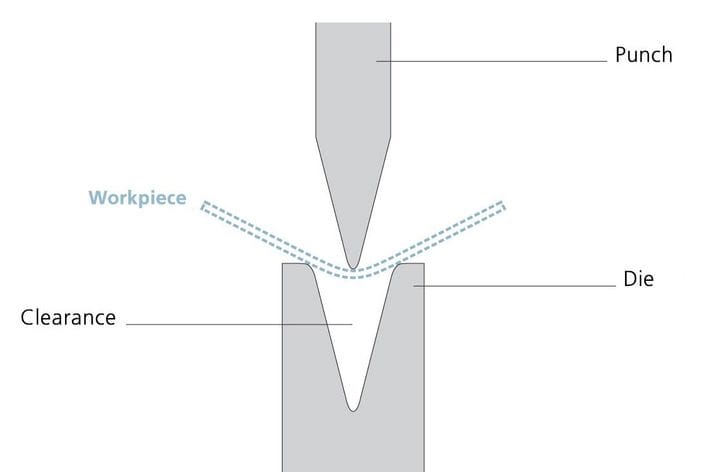
In Air Bending, the punch presses the sheet into the V-die, but—and this is crucial—the sheet never touches the bottom of the die. The metal rests on three points: the tip of the punch and the two shoulders of the die.
- Tonnage Requirement: Lowest.
- Why it works: You are using the leverage of the V-opening.
- Accuracy: Dependent on the precision of the ram’s depth control (Y-axis).
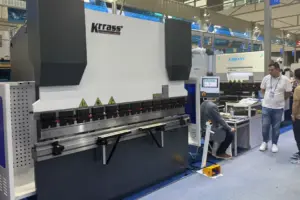
- KRRASS Advantage: KRRASS press brakes utilize advanced CNC controls (like DELEM or Cybelec systems) that control the ram depth to within micrometers. This allows for highly accurate Air Bending, keeping tonnage requirements low and extending the machine’s life.
2. Bottom Bending (Bottoming)
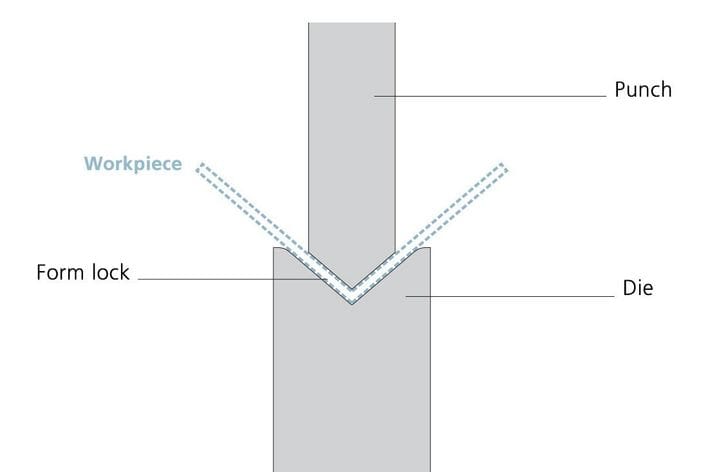
In this method, the punch pushes the metal all the way down until it contacts the bottom of the V-die. The material is essentially stamped into the shape of the die.
- Tonnage Requirement: High (3x to 5x of Air Bending).
- Why the increase? Once the air gap is removed, you are no longer just bending the metal; you are compressing it. You are trying to thin the material at the radius point.
- Risk: If you calculate tonnage based on the Air Bending formula but then set your operator to Bottom Bend, you will overload the machine instantly. For example, if the Air Bend calculation says 50 tons, Bottoming might require 200 tons.
3. Coining
Coining is an older method, rarely used today except for very specific high-precision or small-radius tasks. Here, the punch literally penetrates the metal, thinning it significantly to eliminate spring-back entirely.
- Tonnage Requirement: Extreme (8x to 10x of Air Bending).
- Equipment Impact: This requires massive machines for small parts. It exerts immense stress on the frame and hydraulics. Unless your brakes hydraulic press is specifically designed for coining operations, you should strictly avoid this method.
Table 2: Tonnage Comparison by Method (Example: Mild Steel)
| Bending Method | Mechanism | Estimated Tonnage Factor | Example Load (If Air Bend = 100T) |
|---|---|---|---|
| Air Bending | 3-point contact | 1.0 (Baseline) | 100 Tons |
| Bottoming | Die contact + Compression | 3.0 – 5.0 | 300 – 500 Tons |
| Coining | Penetration / Flow | 8.0 – 10.0 | 800 – 1000 Tons |
Mastering Tonnage Charts
While formulas are great for engineers, operators on the floor rarely have time to pull out a calculator for every setup. This is where Tonnage Charts come in. Every KRRASS machine typically comes with a tonnage chart sticker on the side of the frame. Learning to read this is a primary skill.
How to Read a Tonnage Chart
A standard chart usually lists:
- Left Column: Material Thickness (T).
- Top Row: V-Die Openings (V).
- Intersection Cells: The tonnage required per meter (or per foot).
Crucial Note: Most charts show tonnage per meter or per foot, not for the full length of your part.
- Step 1: Find your material thickness on the left.
- Step 2: Find your chosen V-die on the top.
- Step 3: Find the number where they intersect. Let’s say it is “40 tons/meter.”
- Step 4: Multiply this number by the length of your bend. If your part is 3 meters long, you need 40 $\times$ 3 = 120 tons.
Also, look for the Minimum Flange Length (b) on the chart. If you choose a large V-die to save tonnage, the chart will tell you the minimum length of the leg required to bridge the gap. If your flange is too short, the sheet will simply fall into the V-die rather than bending.
The Hidden Danger: Center Loading and Deflection
We touched on this briefly in Part 1, but it warrants a detailed breakdown. A brakes hydraulic press is designed to distribute force. When you concentrate all the force in the center, you create a “sinkhole” effect.
Understanding Ram Deflection
Imagine a wooden shelf. If you place a heavy weight in the exact center, the wood bows downward. A steel press brake ram does the same thing, albeit microscopically.
If you have a 200-ton machine, and the bed is 4 meters long, the machine is designed to handle roughly 50 tons per meter.
- Scenario: You put a 300mm (0.3m) part in the center.
- Action: You apply 100 tons of force to that small part.
- Result: You are applying the equivalent of 333 tons per meter (100 / 0.3) to that specific section of the ram.
This exceeds the specific resistance of the steel structure. Over time, this causes “permanent set,” where the ram becomes permanently bowed. Once this happens, the machine will never bend straight again. The center of your long angles will always be “under-bent” compared to the ends.
The KRRASS Solution: Crowning Systems
To combat deflection, high-quality machines utilize Crowning Systems.
- Mechanical Crowning: A system of wedges inside the bottom beam that can be adjusted (manually or via CNC) to push the center of the die upward, countering the deflection of the ram.
- Hydraulic Crowning: Cylinders in the bottom beam exert upward pressure.
At KRRASS, our high-end CNC press brakes feature automatic CNC crowning. When you input the material thickness and length into the controller, the system calculates the expected deflection and automatically adjusts the crowning wedges to ensure the bend is perfectly linear from end to end. This not only improves part quality but protects the tool from localized overloading.
Safety Margins: The 80% Rule
Just because your car speedometer says 200 km/h doesn’t mean you should drive 200 km/h all day. The engine would overheat. The same applies to hydraulic machinery.
We recommend the 80% Rule: Never plan a production run that requires more than 80% of the machine’s rated capacity.
- Machine Capacity: 100 Tons.
- Safe Working Limit: 80 Tons.
If your calculation shows you need 95 tons, you are too close to the edge. Material inconsistencies (like a hard spot in the steel) could spike the required pressure over 100 tons, causing the machine to stall. Running a machine at 100% capacity continuously heats the hydraulic oil, degrades seals faster, and accelerates wear on the pump. Stepping up to the next size machine ensures longevity and reliability.
Why Choosing the Right Manufacturer Matters
Calculating tonnage is not just about math; it is about matching the application to the right technology. At KRRASS, we don’t just sell machines; we sell solutions based on these engineering principles.
When you browse the brakes hydraulic press options on www.krrass.com, you will see we categorize machines not just by price, but by capability.
- For High Tonnage/Heavy Plate: We offer machines with reinforced frames and heavy-duty hydraulics designed for the high-impact shock of bending thick plate.
- For Precision/Thin Sheet: We offer high-speed electric or hybrid brakes that prioritize speed and accuracy over raw crushing power.
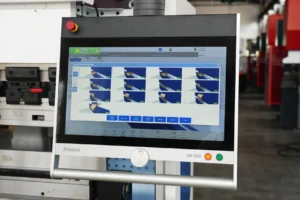
Our controllers (from brands like Delem and Cybelec) have built-in tonnage calculators. You simply input the material grade, thickness, and length, and the KRRASS machine will tell you exactly how much tonnage is required. If the job exceeds the machine’s limit, the system will warn you before you even step on the pedal. This integration of software and hardware is what separates modern fabrication from the guesswork of the past.
Conclusion
The brakes hydraulic press is the heart of the sheet metal shop. It is a powerful beast that commands respect. By understanding the physics of tensile strength, the geometry of V-die openings, and the critical differences between air bending and bottoming, you transform from a machine operator into a master fabricator.
Remember the core takeaways:
- The Material Matters: Tensile strength acts as a multiplier.
- The V-Die is Key: Wider dies reduce tonnage (and increase radius).
- Avoid Bottoming: Unless absolutely necessary, stick to Air Bending to save force.
- Mind the Limit: Keep your loads distributed and stay within 80% of the machine’s capacity.
Correctly calculating tonnage prevents damage to your expensive investment, ensures the safety of your team, and guarantees that every part leaving your shop meets the highest quality standards.
FAQ
What is tonnage and why is it important for hydraulic presses?
Tonnage refers to the amount of force a hydraulic press can exert to bend metal sheets. Understanding tonnage is crucial because it helps operators prevent damage to the machine and ensure safe operations. If the applied force exceeds the machine’s capacity, it can lead to machine failure, broken tools, or incorrect bends.
How does material type affect tonnage calculations?
Different materials have different strengths, which affects how much force is needed to bend them. For example, bending stainless steel requires about 50% to 60% more tonnage than bending mild steel. Knowing the material type helps in calculating the exact force needed for bending.
What role does material thickness play in tonnage requirements?
Material thickness, denoted as ‘T’, significantly impacts tonnage requirements. If you double the thickness of the metal, the required force can quadruple in many cases. This means thicker materials need much more force to bend correctly.
What is the V-die opening, and how does it influence bending?
The V-die opening is the width of the bottom die used in the bending process. A wider V-die requires less force to bend the material because it provides more leverage. However, using a wider V-die can also create a larger bend radius, which may not be suitable for all designs.
What is the ‘80% Rule’ for hydraulic press operation?
The ‘80% Rule’ suggests that you should not operate your hydraulic press at more than 80% of its capacity. This rule promotes safety and helps avoid overheating the machine and the hydraulic oil, leading to longer machine life and fewer breakdowns.
What happens if I apply too much tonnage to a small part?
Applying too much tonnage to a small part can cause the press to bow, leading to permanent damage over time. It’s essential to distribute the force evenly and ensure not to exceed the machine’s rated capacity, especially with smaller parts.
What is the difference between air bending and bottom bending?
Air bending involves bending the metal without it touching the bottom of the die, requiring less force. In contrast, bottom bending pushes the metal all the way into the die, significantly increasing the tonnage requirement and the risk of overloading the machine.
Why is it important to choose the right V-die for bending?
Choosing the right V-die is crucial because the die affects the tonnage needed for bending. An incorrect V-die can lead to inaccurate bends and increase the required force, which may overload your hydraulic press and lead to damage.
How can I tell if my machine is overloaded?
If your machine is overloaded, you may hear unusual noises, notice a sudden drop in performance, or receive alerts from the machine’s control system. Always monitor your tonnage calculations and avoid exceeding your machine’s limits.
How can I ensure the safety of my team while using the hydraulic press?
To ensure safety, always follow the manufacturer’s guidelines and the ‘80% Rule’ for tonnage. Train your team on proper operating procedures, perform regular maintenance, and always wear appropriate safety gear when operating the hydraulic press.


 English
 Arabic
 French
 Portuguese
 Russian
 Spanish