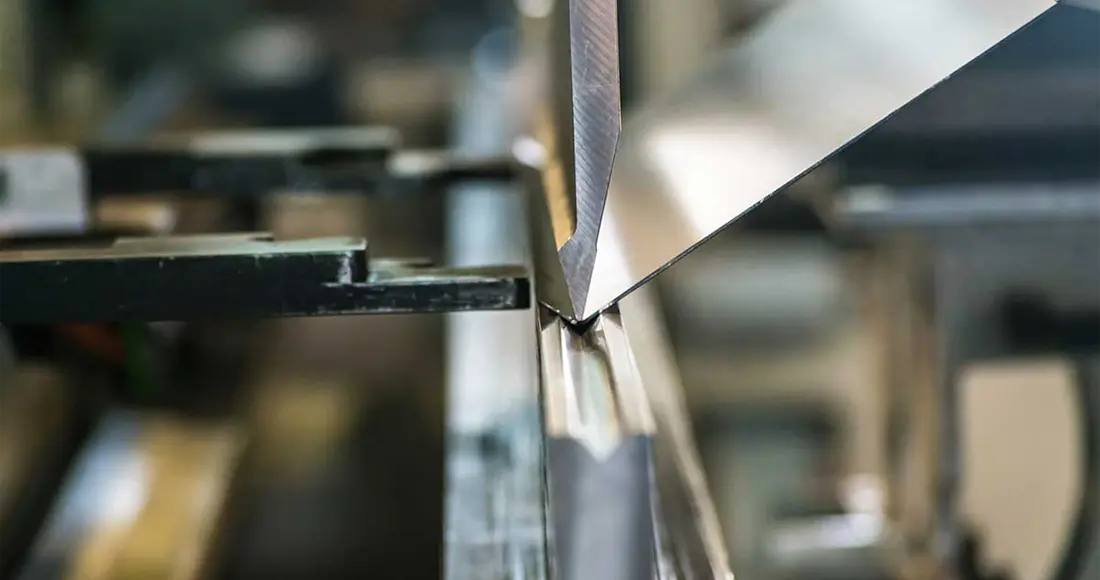
Sheet metal fabrication plays a critical role in the manufacturing industry, finding applications in construction, automotive, aerospace, and various other fields. The versatility of sheet metal, along with its ability to be molded into different shapes and sizes, makes it a popular choice for creating complex and intricate designs.
However, to ensure the success of any sheet metal fabrication project, it is essential to have a solid understanding of design principles and best practices. This article serves as a comprehensive guide to sheet metal fabrication design, offering tips for material selection, geometric constraints, and cost-effective design strategies.
Whether you're an experienced engineer or a novice designer, this guide will assist you in creating high-quality sheet metal parts that meet the requirements and specifications of your project.
Visão geral da fabricação de chapas metálicas
In manufacturing, sheet metal refers to anything thinner than 0.25 inches. All sheet metal parts must have a consistent width, which limits their applications but ensures durability and longevity.
Sheet metal parts are commonly used in applications such as automobile chassis, where the strength-to-weight ratio is crucial. Due to their lower thickness, sheet metal parts are generally hollow, resulting in reduced weight without compromising load-bearing capacity.
While precision processes may not be necessary for simple applications, avoiding precision sheet metal fabrication for high-value applications is impractical as it may lead to equipment damage due to wear and tear.
O princípio de funcionamento
The working principle behind sheet metal fabrication is relatively straightforward. It relies on the elasticity of the metal and the fact that cold-rolled metal provides better durability. Sheet metal fabrication involves two main methods: cutting and forming.
As the name suggests, cutting involves removing a portion of the sheet to achieve the desired shape. Forming, on the other hand, is a more complex process consisting of three different processes that work together to create the required form. Design and manufacturability must be carefully considered in the process to minimize waste and ensure perfection.
In most cases, manufacturers rely on CAD files in either the DXF or DWG format to ensure compliance with the design. Cutting and forming processes often work in tandem to expedite results in most projects. While sheet metal fabrication typically requires no post-processing, some finishing and joining techniques may be necessary depending on the application.
As 4 principais técnicas de fabricação de chapas metálicas
Sheet metal fabrication involves two primary processes: forming and cutting. These techniques work together to shape the final product. Cutting is a relatively simple process, while forming includes stamping, bending, and punching as sub-techniques.
Here are the key details about the main techniques used in creating sheet metal parts:
1 - Cutting
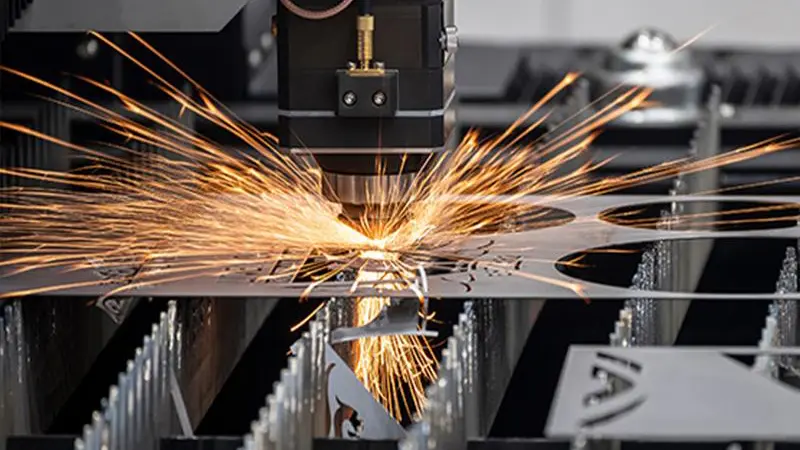
The cutting process removes excess sheet metal to achieve the final form. There are three main approaches to cutting sheet metal:
- Corte a laser
- Corte a plasma
- corte a jato de água
2 - Bending
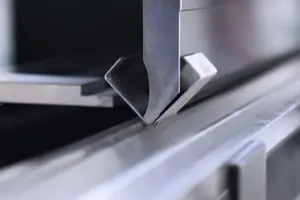
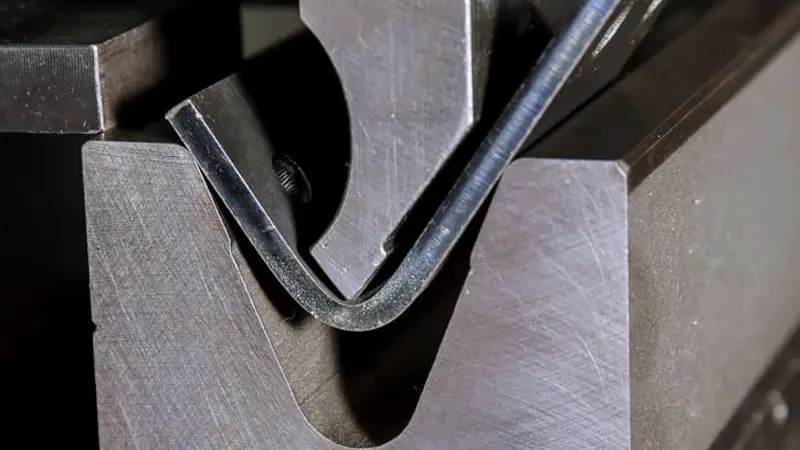
The bending process applies significant force at a specific point on the sheet metal to obtain the desired shape. In some cases, the area under the bend may require preparation, such as bend notches, which indicate the bend location and facilitate the process.
3 - Stamping
Stamping is a complex process that combines shearing, bending, and stretching to create complex parts efficiently. Manufacturers often choose stamping for time-sensitive projects that require intricate designs.
4 - Punching
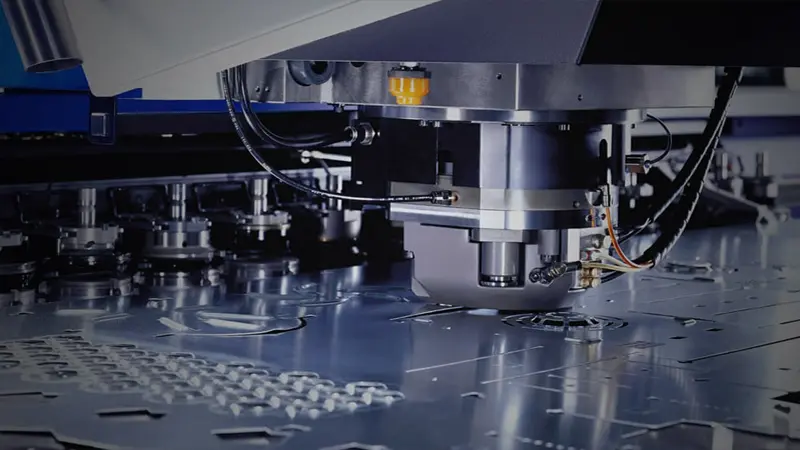
Punching involves using different techniques, including shearing, bending, and stretching, to create new shapes from sheet metal. Some punching processes even involve joining multiple pieces using various techniques.
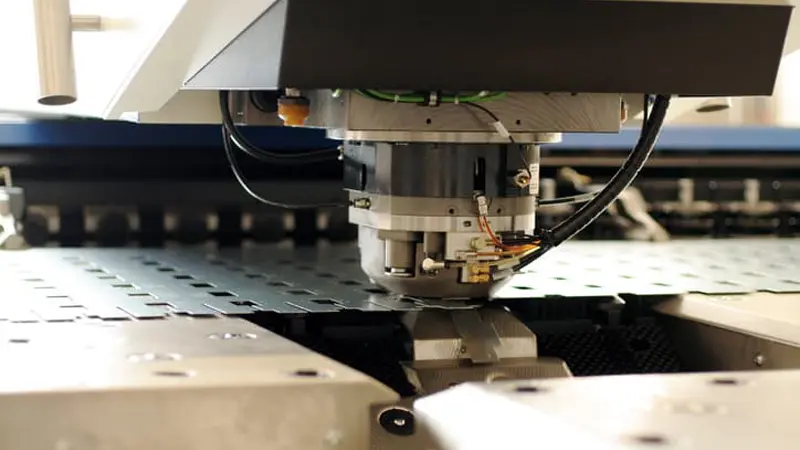
Principais vantagens e limitações do uso de chapas metálicas na fabricação.
Sheet metal parts offer several advantages that make them popular in many industries. However, there are also limitations to consider. Understanding these advantages and limitations is crucial for manufacturers to determine the appropriate applications for sheet metal.
| Vantagens | Desvantagens |
|---|---|
| Prazo de entrega rápido em comparação com outros métodos de fabricação. | É difícil criar designs complexos com detalhes intrincados, o que pode limitar a gama de formas e formatos que podem ser produzidos. |
| Componentes de alta qualidade para produção e prototipagem. | Requer investimento significativo em ferramentas e outros equipamentos, o que pode ser um obstáculo à produção em pequena escala. |
| Suficientemente versátil para trabalhar com diversos metais, como aço, alumínio e cobre. | Possuem prazos de entrega mais longos em comparação com outros métodos de fabricação devido às múltiplas etapas envolvidas no processo, como corte, conformação e acabamento. |
| Proporciona uma elevada relação resistência/peso devido ao seu design oco. | Requer mão de obra especializada, o que pode ser caro. |
| Na maioria dos casos, não requer pós-processamento. |
Diretrizes para o projeto de fabricação de chapas metálicas
As mentioned earlier, sheet metal fabrication design requires attention to specific requirements that vary based on the overall product design. Simple products may have fewer requirements, while intricate geometries may necessitate additional processes for market readiness.
Sheet metal fabrication generally follows a set of best practices to ensure perfection and deliver the highest quality in the shortest time. The following five categories encompass the general guidelines for sheet metals:
Tolerâncias
Tolerance is a critical parameter in various applications. The general rule of thumb is that higher precision requires more resources and incurs additional costs. Therefore, tolerances should align with the application.
For example, in the automobile industry, the precision required for the door or body parts is typically lower than that required for the chassis or other integral components. While tolerance requirements depend on project-specific needs, relying on set quality standards can help maintain consistency and performance. Compliance with industry standards also facilitates meeting industrial requirements and building consumer trust in the brand.
The prevalent standard for sheet metal fabrication is ISO 2768, which covers tolerance requirements across multiple industries while maintaining a balance between costs and processing capabilities.
Tolerâncias gerais
Sheet metal fabrication follows several general tolerances that are universally used in compliance with international standards. However, sensitive applications like aerospace and automotive may have exceptions to these standards due to the criticality of precision for optimal performance.
| Recurso | Faixa de tolerância prevalente | Notas adicionais |
|---|---|---|
| Espessura da parede | 0,9 mm a 20 mm | |
| Deslocamentos | 0,3 mm a 0,7 mm | |
| Cachos | >2x material thickness | Qualquer dimensão de curvatura inferior à recomendada tornaria a folha quebradiça. |
| Curvas | 0.9mm–1.2mm; 1.8mm–2.4mm; 3.8mm–5.0mm; 7.5mm–10mm; 15mm–20mm | É esperada uma variação de +/- um grau em todas as curvas. Além disso, quaisquer outras especificações aumentarão seus custos. |
| Bainhas | Inside dia = material thickness with return length to be 4x the thickness | |
| Escareadores | Major dia = +/- 0,254 mm; Minor dia > 2/3 thickness | |
| Furos e ranhuras | Dia > material thickness | Um diâmetro menor que a espessura do material causaria rachaduras na chapa. |
| Entalhes e abas | Notch width > 1.5x thickness; Length > 5x thickness |
Fundamentos da Formação
Forming involves bending a flat sheet of metal into a predetermined shape by applying pressure. The process requirements and details vary depending on the type of bending process. While numerous methods exist, the following three are the most common for sheet metal bending:
- Brake pressing: This manual process uses a clamping bar and a plate to form the metal sheet. It is suitable for prototyping and small-scale productions.
- Roll bending: This method produces results in the form of cylinders, cones, or other arcs, while following the same principles as brake pressing.
- Press brake bending: This advanced bending process utilizes hydraulic machines with punches and dies. It is suitable for metal sheets up to 6mm thick and allows for precise features.
Parâmetros integrais para dobra de chapas metálicas
When it comes to the bending process, several parameters must be considered by manufacturers and designers. Adhering to these design requirements is crucial for characterizing any sheet metal bend and ensuring excellent results.
Aqui estão os seis parâmetros mais importantes para qualquer operação de dobra de chapa metálica.
- Linha de Curva: The bend line is a straight line on the sheet's surface that marks the beginning and end on both sides of the bend. The industry standard for bend lines is to maintain a distance of 5 times the sheet thickness between the inside edge and outside of the bend.
- Bend Radius: • Raio de curvatura: O raio de curvatura refere-se à distância entre o eixo de curvatura e a superfície interna do material, entre duas linhas de dobra. É recomendável usar um raio de curvatura que seja pelo menos igual à espessura do material. Um raio de curvatura maior é ainda melhor, mas usar um raio menor que a espessura do material pode reduzir a capacidade de carga da peça.
- Bend Angle: The bend angle is the angle created by the bend with the imaginary perpendicular line coming from the axis. While there is no specific number for the bend angle, it is recommended to ensure that the flange length is four times the thickness. Keeping all bend angles the same is also good practice.
- Eixo neutro: The neutral axis is the portion of a sheet that remains at its original length without stretching or compressing. While there is no legal limit or guideline for its location, the accuracy of other factors, such as bend radius and angle, plays a crucial role in determining the performance of the final product. Precise factors lead to better product performance.
- The K-Factor: The K-factor of a material is a measure of its location, determined by dividing the distance between the material and its thickness (t) by its T. The K-factor is influenced by factors such as the material type, bending process, and bend angle. To achieve optimal results, the K-factor should fall within the range of 0.25 to 0.50. The K-factor can be calculated using the formula K = T/t.
- Bend Allowance: To create accurate and consistent bent parts, it is important to measure and account for the arc length and the distance between the neutral axis and the bend lines. Accurate bend allowances appropriate for the material, thickness, and type of bending process (e.g., air bending, bottom bending, or coining) should be used.
Noções básicas de corte
Cutting is another essential process in sheet metal fabrication. In many cases, it offers a simpler alternative that provides fast results with acceptable precision. During the design phase, sheet metal design guidelines focus on the following five parameters.
Seleção de Materiais
Material characteristics play a crucial role in determining the suitable cutting process for a specific material. For example, aluminum is generally easier to cut than steel due to its relative strength and durability.
When selecting materials, manufacturability should also be considered. If both steel and aluminum can withstand the required operation's loads, it may not always be smarter to choose the stronger alternative (steel) without considering manufacturing capabilities.
Diâmetro do furo
When designing a product involving drilled holes in a sheet, it is important to consider the sheet's thickness and the diameter of the hole. A general rule of thumb is to ensure that the hole's diameter is at least equal to the overall sheet thickness.
If the hole diameter is too small compared to the sheet thickness, cracks and brittle areas may form around the hole. Over time, these cracks can propagate and result in durability issues that negatively affect the product's overall performance.
Therefore, it is essential to ensure that the hole diameter is appropriate for the sheet thickness, maintaining the structural integrity and long-term durability of the product.
Endurecimento localizado
During the cutting process, significant heat can be generated, affecting the material's properties. Overheating in the region surrounding the cut can lead to localized hardening. To prevent this issue, it is recommended to reduce the cutting speed and use coolants to regulate the temperature in the affected area. These measures minimize the risk of localized hardening.
Distorção
Distortion in sheet metal fabrication refers to the warping, bending, twisting, or buckling of the metal sheet during the manufacturing process. This issue can occur due to factors like temperature changes, stress, or pressure during fabrication. Distortion can cause significant problems in the final product, such as dimensional inaccuracies, poor fitment, and reduced strength.
To avoid distortion, several steps can be taken during sheet metal fabrication:
Corte
The kerf is directly related to the width of the cutting tool and the material thickness being cut. It represents the width of material removed by the cutting tool and determines the amount of material wasted in the cutting process.
For example, if a laser beam has a kerf of 0.1mm and cuts through a 1mm thick sheet of metal, the total width of material removed will be 0.2mm (0.1mm from each side of the cut). The kerf width may vary based on the cutting process, material type, and thickness.
Considering the kerf is important when designing parts for sheet metal fabrication, as it can impact the final dimensions of the part. If precise dimensions are required, the designer should account for the kerf and adjust the design accordingly. Additionally, the kerf can also affect the cost of the fabrication process, as wider kerfs result in more wasted material.
Características comuns em peças de chapa metálica
Sheet metal parts often incorporate several common features to meet industry requirements. Here are the six main features commonly found in sheet metal parts:
| Parameters | Descrição | Recommendations |
|---|---|---|
| Corner Fillets | Os filetes de canto são bordas ou cantos arredondados em peças de chapa metálica, criados para evitar arestas vivas, que podem ser perigosas e causar concentração de tensão no metal, levando à falha. | Dimensões: A largura do filete deve ser pelo menos igual à espessura da chapa metálica. Em outras palavras, um filete de 2 mm deve ser usado para chapas metálicas com 2 mm de espessura ou menos. |
| Simetria: Os filetes em uma peça devem ser simétricos. Isso significa que os filetes em cantos opostos devem ter o mesmo tamanho. | ||
| Uniformidade: Os filetes devem ter tamanho uniforme em toda a peça. Isso significa que os filetes em todos os cantos devem ter o mesmo tamanho. | ||
| Posicionamento: Os filetes devem ser colocados em áreas onde é provável que ocorram concentrações de tensão. Isso inclui áreas onde a chapa metálica está dobrada ou onde há uma mudança de forma ou direção. | ||
| Raio: O raio do filete deve ser o maior possível. Isso ajuda a distribuir a tensão de maneira mais uniforme e reduz a probabilidade de concentrações de tensão. | ||
| Projeto: O projeto da peça deve ser tal que os filetes possam ser adicionados facilmente sem comprometer a integridade da peça. | ||
| Costelas | Elementos em relevo, geralmente perpendiculares à superfície da peça de chapa metálica. São utilizados para conferir resistência e rigidez à peça sem aumentar muito o peso. | Mantenha a espessura da nervura em no máximo 60% da espessura da chapa metálica para evitar a formação de concentrações de tensão. |
| Utilize filetes para suavizar a transição entre a costela e o material circundante, o que ajudará a distribuir as tensões de maneira mais uniforme. | ||
| Evite colocar as nervuras muito próximas umas das outras ou muito perto das dobras, pois isso pode criar pontos fracos no material. | ||
| Considere o uso de nervuras cônicas ou de altura variável para distribuir as tensões de maneira mais uniforme. | ||
| Relevo | Recessed features that are typically parallel to the surface of the sheet metal part. They are used to add depth or texture to the part, or to create a space for another component to fit into. | A profundidade do relevo deve ser mantida em no máximo 50% da espessura da chapa metálica para evitar a formação de concentrações de tensão. |
| Utilize filetes para suavizar a transição entre o relevo e o material circundante, o que ajudará a distribuir as tensões de maneira mais uniforme. | ||
| Evite colocar relevos muito próximos uns dos outros ou muito perto de dobras, pois isso pode criar pontos fracos no material. | ||
| Considere o impacto do relevo na aparência geral da peça e certifique-se de que esteja alinhado com quaisquer requisitos de marca ou design. | ||
| Chefe Redondo | Uma saliência circular em chapas metálicas é um elemento usado para adicionar resistência e rigidez a uma peça. Geralmente é criada por meio de punção ou conformação de uma depressão circular na chapa metálica, o que faz com que o metal ao redor do perímetro da depressão se projete para fora, formando uma saliência circular. | Escolha o tamanho e a localização corretos: considere cuidadosamente a posição e o tamanho do ressalto para garantir que ele forneça o suporte e a resistência necessários sem interferir em outros componentes ou criar desafios de fabricação. |
| Utilize as ferramentas corretas: Criar um ressalto redondo requer ferramentas especializadas, como um conjunto de punção e matriz ou uma ferramenta de conformação. É importante usar as ferramentas adequadas para garantir que o ressalto seja formado corretamente e que a chapa metálica não seja danificada durante o processo. | ||
| Considere a espessura do material: A espessura da chapa metálica afetará o tamanho e o formato do ressalto circular que pode ser moldado. Materiais mais espessos podem exigir ressaltos maiores ou mais profundos para fornecer a resistência e a rigidez necessárias. | ||
| Característica de covinha | As reentrâncias são frequentemente usadas por diversos motivos, incluindo: melhorar a rigidez e a resistência de uma peça de chapa metálica, adicionando reforço; criar uma superfície lisa e nivelada para a fixação de parafusos ou outros componentes; e proporcionar espaço livre para outras peças ou componentes. | Considere cuidadosamente o tamanho e a localização da depressão. As depressões devem ser colocadas em áreas onde proporcionarão o máximo benefício, e seu tamanho deve ser adequado à aplicação. |
| Cavidades muito grandes ou profundas podem enfraquecer o material, enquanto cavidades muito pequenas ou rasas podem não fornecer reforço suficiente. | ||
| Escolha a ferramenta certa para o trabalho. Existem diversas ferramentas que podem ser usadas para criar covinhas, incluindo punções, matrizes e ferramentas de conformação. A ferramenta escolhida dependerá do tamanho e formato da covinha, bem como do tipo de material utilizado. | ||
| Take into account the thickness and material of the sheet metal. Different types of sheet metal may require different techniques or tools for creating dimples, and thicker materials may require more force or a larger tool. | ||
| Esteja ciente de quaisquer limitações ou restrições no projeto. Relevos podem ser recursos úteis, mas podem não ser apropriados para todas as aplicações. Certifique-se de que o projeto considere quaisquer problemas ou desafios potenciais que possam surgir com a adição de relevos. | ||
| Recurso de veneziana | O principal objetivo das venezianas é melhorar o fluxo de ar e a ventilação no compartimento ou painel em que são instaladas. As venezianas podem ser projetadas para atender a uma finalidade específica, como direcionar o ar em uma determinada direção, reduzir o ruído ou fornecer proteção contra poeira, sujeira ou umidade. | Dimensões: O tamanho das venezianas deve ser cuidadosamente escolhido com base no fluxo de ar necessário e no espaço disponível para instalação. Venezianas muito pequenas podem não fornecer ventilação suficiente, enquanto as muito grandes podem comprometer a integridade estrutural do painel. |
| Orientação: A orientação das venezianas deve ser escolhida com base na direção do fluxo de ar e na localização de quaisquer obstruções ou obstáculos potenciais que possam afetar o fluxo de ar. | ||
| Formato: O formato das venezianas pode influenciar a eficiência do sistema de ventilação. Venezianas com formato aerodinâmico e otimizado podem melhorar o fluxo de ar e reduzir a turbulência. | ||
| Material: O material utilizado para as venezianas deve ser selecionado com base na aplicação pretendida, bem como nas condições ambientais às quais o painel será exposto. Por exemplo, aço inoxidável ou alumínio podem ser mais adequados para aplicações externas onde a exposição aos elementos é uma preocupação. | ||
| Método de fabricação: O método de fabricação utilizado para criar as venezianas deve ser selecionado com base na precisão, consistência e relação custo-benefício desejadas para o processo de fabricação. | ||
| Nocaute por round | Os furos circulares podem ser usados para criar orifícios de diversos tamanhos, dependendo do tamanho do punção e da matriz utilizados. São comumente empregados na fabricação de chapas metálicas para aplicações como caixas elétricas, sistemas de climatização e invólucros. | Escolha o tamanho certo: Certifique-se de usar o punção e a matriz do tamanho correto para o furo que você precisa. Usar o tamanho errado pode resultar em um furo muito pequeno ou muito grande. |
| Use o material correto: os extratores de furos redondos são geralmente projetados para funcionar com tipos específicos de chapa metálica, portanto, certifique-se de usar a ferramenta apropriada para o material com o qual você está trabalhando. | ||
| Mantenha o punção e a matriz afiados: Com o tempo, o punção e a matriz podem perder o fio e começar a deformar, o que pode resultar em furos de má qualidade. Mantenha-os afiados e em boas condições para obter os melhores resultados. | ||
| Considere a espessura do material: furos circulares são mais adequados para materiais mais finos. Se precisar fazer furos em chapas metálicas mais espessas, talvez seja necessário usar uma ferramenta ou técnica diferente. | ||
| Tenha cuidado com as rebarbas: Ao usar furos de encaixe redondos, existe o risco de criar rebarbas ao redor da borda do furo. Certifique-se de remover quaisquer rebarbas com uma ferramenta de rebarbação ou lixa para um acabamento perfeito. |
Espessura do material
The recommended material thickness for sheet metal depends on the specific application and the chosen material. In general, thicker metals provide greater strength and durability, while thinner metals offer flexibility and lightweight properties. Typical thicknesses for sheet metal range from 0.5mm to 6mm, but they can vary based on the material and intended use. The following chart presents recommended material thicknesses for common metals used in sheet metal fabrication:
| Metal | Medidor | milímetros | Polegadas |
|---|---|---|---|
| Aço/Aço inoxidável/Alumínio | 22 | 0.8 | 0.031 |
| Aço/Aço inoxidável/Alumínio | 20 | 1.0 | 0.039 |
| Aço/Aço inoxidável/Alumínio | 18 | 1.2 | 0.047 |
| Aço/Aço inoxidável/Alumínio | 16 | 1.6 | 0.063 |
| Aço/Aço inoxidável/Alumínio | 14 | 2.0 | 0.079 |
| Aço/Aço inoxidável/Alumínio | 12 | 2.5 | 0.098 |
| Aço/Aço inoxidável/Alumínio | 10 | 3.2 | 0.126 |
Observação: Nota: Este gráfico fornece diretrizes gerais e a espessura adequada do material para uma determinada aplicação pode depender de fatores adicionais.
Erros comuns no projeto de chapas metálicas que você deve evitar.
Sheet metal fabrication is a complex process involving designing, cutting, bending, and assembling sheet metal into a final product. Even skilled designers can make mistakes that lead to costly rework or scrapped parts. To avoid these errors, it is crucial to be aware of the most common sheet metal fabrication design mistakes and take steps to prevent them.
Mistake 1: CAD File Without Bends
A common mistake to avoid is providing a CAD file without bends. A sheet metal part without bends cannot be fabricated as a single piece and may require additional parts and labor to join multiple pieces together. It is important to include bends in the design and specify the bend angles and radii to ensure correct manufacturability.
Mistake 2: Features Too Close to Bends
Another mistake is placing features such as holes, tabs, etc., too close to bends. This can result in deformed metal parts that waste time and money. To prevent this mistake, adhere to the 4T rule in all CAD designs. The 4T rule states that all features should be at least four times the material thickness away from any bend line.
Erro 3: Raio de curvatura interna perfeitamente perpendicular
Attempting to achieve a perfectly sharp corner in a sheet metal bend can lead to material deformation and cracking, compromising the final product's integrity. Specify a minimum bend radius appropriate for the material and thickness used to ensure a smooth transition in the bend and prevent stress concentrations that could result in failure. The bend radius can be determined by measuring the length of the bent area and dividing it by two. Using the same radius for all bends is more cost-effective than using different radii for each bend.
Erro 4: Não incluir detalhes de hardware no arquivo CAD
It is best to include as many details as possible in the CAD file, including specific hardware specifications, sizes, and locations. This ensures a smoother fabrication process and a more accurate final product. For example, failing to include necessary hardware details may delay assembly time and increase costs.
Mistake 5: Choosing an Unsuitable Finish
Finishing is an essential step in the manufacturing process, and different finishes serve different functions beyond aesthetics. Some finishes offer protection against rust and corrosion. While others are solely for cosmetic purposes. Consider the specific requirements of your metal part and choose the appropriate finish accordingly. Understanding the appropriate finish for the intended application is crucial for achieving the desired functionality and appearance of the product.
Mistake 6: Selecting the Wrong Sheet Metal
Consider the application of the part throughout the design process. For example, using unfinished steel in a marine or salty environment would leave the metal parts vulnerable to rust and corrosion. Select the appropriate sheet metal by considering factors such as daily wear, environmental conditions, manufacturing capabilities, cosmetic appearance, required conductivity, and mechanical properties.
Erro 7: Não considerar a resistência do material para perfis em U.
U channels are critical components in many product designs, and their strength depends on the overall strength of the material. Neglecting to consider material strength can result in weak U channels that may bend or break under stress. To avoid this mistake, select the appropriate material and thickness for the U channel based on the expected load and any additional stresses the channel may experience.
Erro 8: Projetar requisitos de soldagem inatingíveis
Consider welding or other mechanical joints in the design phase. Overestimating the welding capabilities can increase complexity and costs. Implement strict design for manufacturing (DFM) practices to ensure all features align with prevalent standards.
Tipos de chapas metálicas
Sheet metal refers to a wide range of metals used in fabrication. The most common types include:
- Aço inoxidável: Known for its versatility, durability, and cost-effectiveness, stainless steel is widely used in various applications.
- Cold Rolled Steel: Suitable for applications where material strength is a primary concern.
- Pre-Plated Steel: Similar to regular steel, but with a special coating to prevent corrosion.
- Alumínio: Lightweight and inert, offering an excellent strength-to-weight ratio.
- Cobre: Expensive but effective, resistant to chemical and biological degradation under normal conditions.
- Latão: An alloy of copper and zinc, known for its corrosion resistance and hardness.
Acabamentos comuns para peças de chapa metálica
While sheet metal often performs well without any additional processing, certain applications benefit from post-processing steps. Common finishes for sheet metal parts include:
- Anodização
- Escovação
- Polimento
- Jateamento com microesferas
- Revestimento em pó
- Galvanização
- Passivação
- Revestimento de cromo
- Acabamentos personalizados sob encomenda
KRRASS: Your One-Stop-Shop for All Sheet Metal Fabrication Equipment
The sheet metal fabrication design guide is made to introduce all the basic concepts of the process to anyone. It’s important for manufacturing partners to fulfill the varying requirements of the industry and comply with the ever-changing industrial standards.
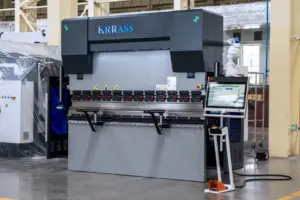
KRRASS is an experienced sheet metal equipment manufacturing partner that can help you take your design from concept to technical production line. Whether you are a startup looking to bring a new product to market or an established company seeking to streamline your manufacturing processes, our team can provide the expertise and support you need.
At KRRASS, we understand the importance of manufacturability and how it can impact the success of your product. Our team of experts is equipped with the latest tools and technologies to provide a comprehensive design for manufacturing (DFM) analysis. We will work closely with you to optimize your sheet metal processing line and identify potential problems early to minimize the risk of production delays or quality issues.
Our manufacturing facilities are equipped with the latest equipment and technology. We can meet the needs of a variety of industries, including aerospace, automotive, medical, and consumer products.
When you partner with KRRASS, you can trust that your sheet metal fabrication equipment will be delivered on time, on budget, and with the highest quality standards. Contact us today to learn more about how we can help bring your design to life and accelerate your time to market.