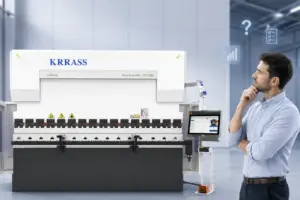
Sheet metal fabrication plays a critical role in the manufacturing industry, finding applications in construction, automotive, aerospace, and various other fields. The versatility of sheet metal, along with its ability to be molded into different shapes and sizes, makes it a popular choice for creating complex and intricate designs.
However, to ensure the success of any sheet metal fabrication project, it is essential to have a solid understanding of design principles and best practices. This article serves as a comprehensive guide to sheet metal fabrication design, offering tips for material selection, geometric constraints, and cost-effective design strategies.
Ya sea que sea un ingeniero experimentado o un diseñador novato, esta guía lo ayudará a crear piezas de chapa metálica de alta calidad que cumplan con los requisitos y especificaciones de su proyecto.
Descripción general de la fabricación de chapa metálica
In manufacturing, sheet metal refers to anything thinner than 0.25 inches. All sheet metal parts must have a consistent width, which limits their applications but ensures durability and longevity.
Sheet metal parts are commonly used in applications such as automobile chassis, where the strength-to-weight ratio is crucial. Due to their lower thickness, sheet metal parts are generally hollow, resulting in reduced weight without compromising load-bearing capacity.
While precision processes may not be necessary for simple applications, avoiding precision sheet metal fabrication for high-value applications is impractical as it may lead to equipment damage due to wear and tear.
El principio de funcionamiento
The working principle behind sheet metal fabrication is relatively straightforward. It relies on the elasticity of the metal and the fact that cold-rolled metal provides better durability. Sheet metal fabrication involves two main methods: cutting and forming.
As the name suggests, cutting involves removing a portion of the sheet to achieve the desired shape. Forming, on the other hand, is a more complex process consisting of three different processes that work together to create the required form. Design and manufacturability must be carefully considered in the process to minimize waste and ensure perfection.
In most cases, manufacturers rely on CAD files in either the DXF or DWG format to ensure compliance with the design. Cutting and forming processes often work in tandem to expedite results in most projects. While sheet metal fabrication typically requires no post-processing, some finishing and joining techniques may be necessary depending on the application.
Las 4 técnicas principales de fabricación de chapa metálica
Sheet metal fabrication involves two primary processes: forming and cutting. These techniques work together to shape the final product. Cutting is a relatively simple process, while forming includes stamping, bending, and punching as sub-techniques.
Here are the key details about the main techniques used in creating sheet metal parts:
1 - Cutting
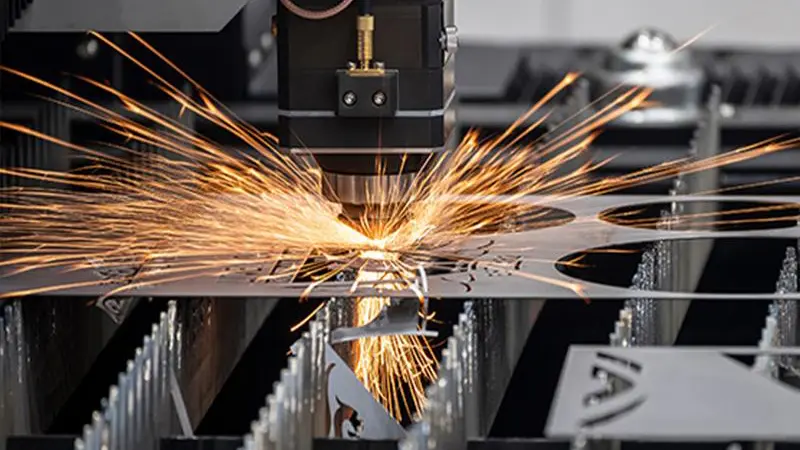
The cutting process removes excess sheet metal to achieve the final form. There are three main approaches to cutting sheet metal:
- Corte por láser
- Corte por plasma
- Corte por chorro de agua
2 - Bending
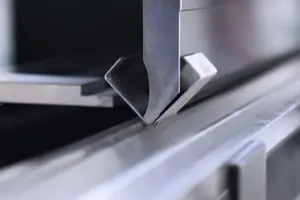
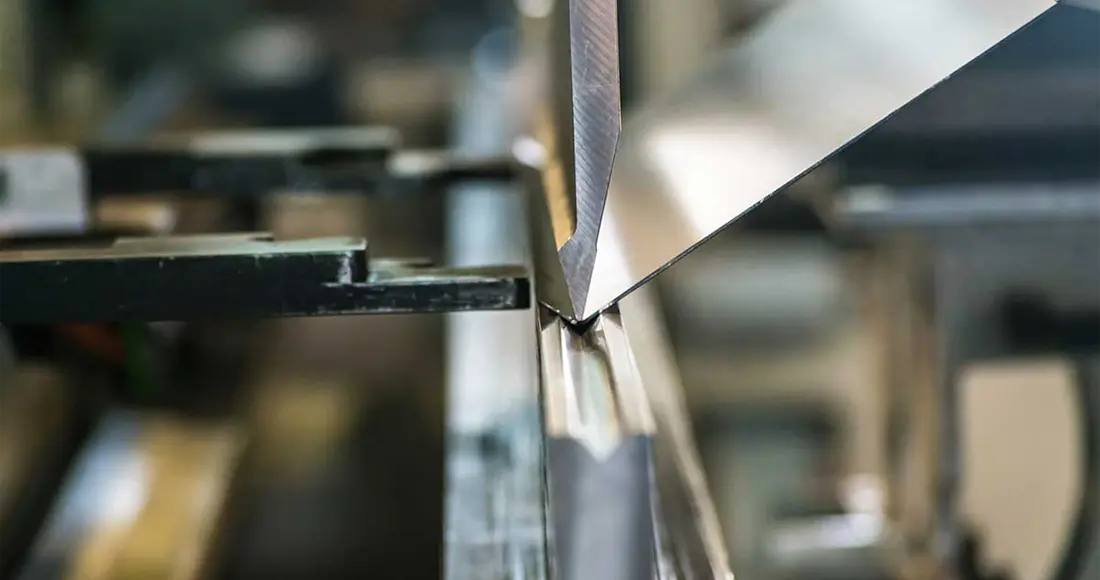
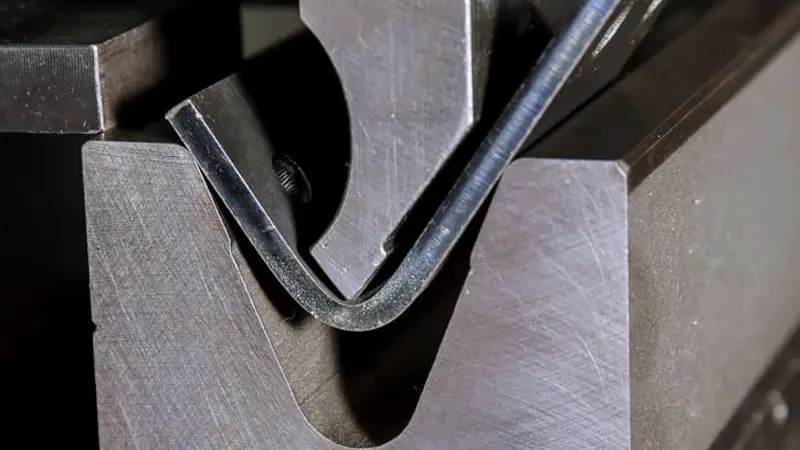
The bending process applies significant force at a specific point on the sheet metal to obtain the desired shape. In some cases, the area under the bend may require preparation, such as bend notches, which indicate the bend location and facilitate the process.
3 - Stamping
Stamping is a complex process that combines shearing, bending, and stretching to create complex parts efficiently. Manufacturers often choose stamping for time-sensitive projects that require intricate designs.
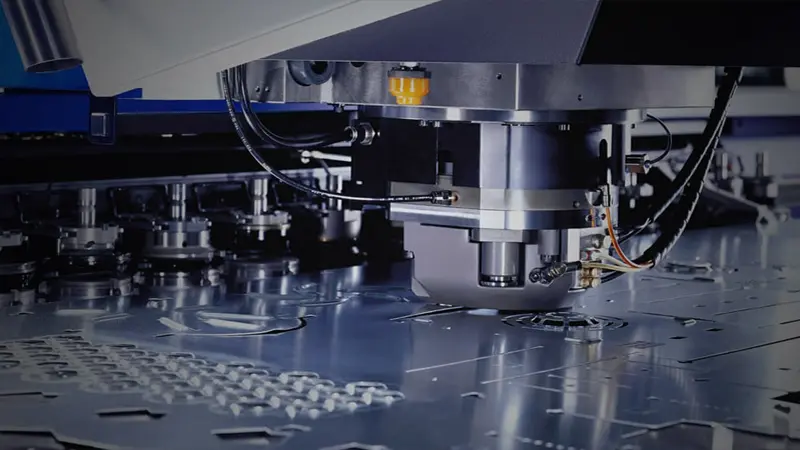
4 - Punching
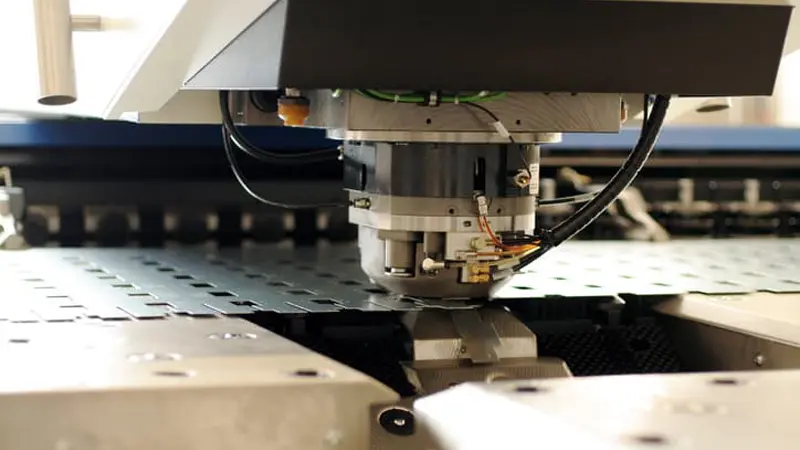
Punching involves using different techniques, including shearing, bending, and stretching, to create new shapes from sheet metal. Some punching processes even involve joining multiple pieces using various techniques.
Las principales ventajas y limitaciones del uso de chapa metálica para la fabricación
Sheet metal parts offer several advantages that make them popular in many industries. However, there are also limitations to consider. Understanding these advantages and limitations is crucial for manufacturers to determine the appropriate applications for sheet metal.
| Ventajas | Desventajas |
|---|---|
| Entrega rápida en comparación con otros métodos de fabricación. | Es difícil realizar diseños complejos con detalles intrincados, lo que puede limitar la gama de formas y figuras que se pueden producir. |
| Piezas de alta calidad tanto para producción como para prototipado. | Requiere una inversión significativa en herramientas y otros equipos, lo que puede ser una barrera para la producción a pequeña escala. |
| Suficientemente versátil para trabajar con varios metales, como acero, aluminio y cobre. | Tienen plazos de entrega más largos en comparación con otros métodos de fabricación debido a las múltiples etapas involucradas en el proceso, como corte, conformado y acabado. |
| Ofrece una alta relación resistencia-peso gracias al diseño hueco. | Requiere mano de obra especializada, lo que puede resultar costoso. |
| No necesita posprocesamiento en la mayoría de los casos. |
Directrices para el diseño de fabricación de chapa metálica
As mentioned earlier, sheet metal fabrication design requires attention to specific requirements that vary based on the overall product design. Simple products may have fewer requirements, while intricate geometries may necessitate additional processes for market readiness.
Sheet metal fabrication generally follows a set of best practices to ensure perfection and deliver the highest quality in the shortest time. The following five categories encompass the general guidelines for sheet metals:
Tolerancias
Tolerance is a critical parameter in various applications. The general rule of thumb is that higher precision requires more resources and incurs additional costs. Therefore, tolerances should align with the application.
For example, in the automobile industry, the precision required for the door or body parts is typically lower than that required for the chassis or other integral components. While tolerance requirements depend on project-specific needs, relying on set quality standards can help maintain consistency and performance. Compliance with industry standards also facilitates meeting industrial requirements and building consumer trust in the brand.
The prevalent standard for sheet metal fabrication is ISO 2768, which covers tolerance requirements across multiple industries while maintaining a balance between costs and processing capabilities.
Tolerancias generales
Sheet metal fabrication follows several general tolerances that are universally used in compliance with international standards. However, sensitive applications like aerospace and automotive may have exceptions to these standards due to the criticality of precision for optimal performance.
| Característica | Rango de tolerancia prevaleciente | Notas adicionales |
|---|---|---|
| Espesor de la pared | 0,9 mm a 20 mm | |
| Compensaciones | 0,3 mm a 0,7 mm | |
| Chinos | >2x material thickness | Cualquier dimensión de rizo menor a la recomendada haría que la hoja se volviera quebradiza. |
| Enfermedad de buzo | 0.9mm–1.2mm; 1.8mm–2.4mm; 3.8mm–5.0mm; 7.5mm–10mm; 15mm–20mm | Se espera una desviación de +/- grados en todas las curvas. Además, cualquier otra especificación incrementará sus costos. |
| dobladillos | Inside dia = material thickness with return length to be 4x the thickness | |
| Avellanadores | Major dia = +/- 0,254 mm; Minor dia > 2/3 thickness | |
| Agujeros y ranuras | Dia > material thickness | Un diámetro menor que el espesor del material provocaría grietas en la chapa. |
| Muescas y pestañas | Notch width > 1.5x thickness; Length > 5x thickness |
Conceptos básicos de formación
Forming involves bending a flat sheet of metal into a predetermined shape by applying pressure. The process requirements and details vary depending on the type of bending process. While numerous methods exist, the following three are the most common for sheet metal bending:
- Brake pressing: This manual process uses a clamping bar and a plate to form the metal sheet. It is suitable for prototyping and small-scale productions.
- Roll bending: This method produces results in the form of cylinders, cones, or other arcs, while following the same principles as brake pressing.
- Press brake bending: This advanced bending process utilizes hydraulic machines with punches and dies. It is suitable for metal sheets up to 6mm thick and allows for precise features.
Parámetros integrales para el doblado de chapa metálica
When it comes to the bending process, several parameters must be considered by manufacturers and designers. Adhering to these design requirements is crucial for characterizing any sheet metal bend and ensuring excellent results.
Aquí están los seis parámetros más importantes para cualquier operación de plegado de chapa metálica.
- Línea de curvatura: The bend line is a straight line on the sheet's surface that marks the beginning and end on both sides of the bend. The industry standard for bend lines is to maintain a distance of 5 times the sheet thickness between the inside edge and outside of the bend.
- Radio de curvatura: Radio de curvatura: El radio de curvatura se refiere a la distancia desde el eje de curvatura hasta la superficie interior de un material entre dos líneas de curvatura. Se recomienda utilizar un radio de curvatura que sea al menos igual al espesor del material. Un radio de curvatura mayor es aún mejor, pero usar un radio menor que el espesor del material puede reducir la capacidad de carga de la pieza.
- Ángulo de curvatura: The bend angle is the angle created by the bend with the imaginary perpendicular line coming from the axis. While there is no specific number for the bend angle, it is recommended to ensure that the flange length is four times the thickness. Keeping all bend angles the same is also good practice.
- Eje neutro: The neutral axis is the portion of a sheet that remains at its original length without stretching or compressing. While there is no legal limit or guideline for its location, the accuracy of other factors, such as bend radius and angle, plays a crucial role in determining the performance of the final product. Precise factors lead to better product performance.
- The K-Factor: The K-factor of a material is a measure of its location, determined by dividing the distance between the material and its thickness (t) by its T. The K-factor is influenced by factors such as the material type, bending process, and bend angle. To achieve optimal results, the K-factor should fall within the range of 0.25 to 0.50. The K-factor can be calculated using the formula K = T/t.
- Bend Allowance: To create accurate and consistent bent parts, it is important to measure and account for the arc length and the distance between the neutral axis and the bend lines. Accurate bend allowances appropriate for the material, thickness, and type of bending process (e.g., air bending, bottom bending, or coining) should be used.
Conceptos básicos de corte
Cutting is another essential process in sheet metal fabrication. In many cases, it offers a simpler alternative that provides fast results with acceptable precision. During the design phase, sheet metal design guidelines focus on the following five parameters.
Selección de materiales
Material characteristics play a crucial role in determining the suitable cutting process for a specific material. For example, aluminum is generally easier to cut than steel due to its relative strength and durability.
When selecting materials, manufacturability should also be considered. If both steel and aluminum can withstand the required operation's loads, it may not always be smarter to choose the stronger alternative (steel) without considering manufacturing capabilities.
Diámetro del agujero
When designing a product involving drilled holes in a sheet, it is important to consider the sheet's thickness and the diameter of the hole. A general rule of thumb is to ensure that the hole's diameter is at least equal to the overall sheet thickness.
If the hole diameter is too small compared to the sheet thickness, cracks and brittle areas may form around the hole. Over time, these cracks can propagate and result in durability issues that negatively affect the product's overall performance.
Therefore, it is essential to ensure that the hole diameter is appropriate for the sheet thickness, maintaining the structural integrity and long-term durability of the product.
Endurecimiento localizado
During the cutting process, significant heat can be generated, affecting the material's properties. Overheating in the region surrounding the cut can lead to localized hardening. To prevent this issue, it is recommended to reduce the cutting speed and use coolants to regulate the temperature in the affected area. These measures minimize the risk of localized hardening.
Distorsión
Distortion in sheet metal fabrication refers to the warping, bending, twisting, or buckling of the metal sheet during the manufacturing process. This issue can occur due to factors like temperature changes, stress, or pressure during fabrication. Distortion can cause significant problems in the final product, such as dimensional inaccuracies, poor fitment, and reduced strength.
To avoid distortion, several steps can be taken during sheet metal fabrication:
Corte
The kerf is directly related to the width of the cutting tool and the material thickness being cut. It represents the width of material removed by the cutting tool and determines the amount of material wasted in the cutting process.
For example, if a laser beam has a kerf of 0.1mm and cuts through a 1mm thick sheet of metal, the total width of material removed will be 0.2mm (0.1mm from each side of the cut). The kerf width may vary based on the cutting process, material type, and thickness.
Considering the kerf is important when designing parts for sheet metal fabrication, as it can impact the final dimensions of the part. If precise dimensions are required, the designer should account for the kerf and adjust the design accordingly. Additionally, the kerf can also affect the cost of the fabrication process, as wider kerfs result in more wasted material.
Características comunes en piezas de chapa metálica
Sheet metal parts often incorporate several common features to meet industry requirements. Here are the six main features commonly found in sheet metal parts:
| Parameters | Descripción | Recommendations |
|---|---|---|
| Corner Fillets | Los filetes de esquina son bordes o esquinas redondeados en piezas de chapa metálica que se crean para evitar bordes afilados, que pueden ser peligrosos y también pueden causar concentración de tensión en el metal, lo que lleva a fallas. | Tamaño: El tamaño del filete debe ser al menos igual al espesor de la chapa. En otras palabras, se debe usar un filete de 2 mm para chapas de 2 mm de espesor o menos. |
| Simetría: Los filetes de una pieza deben ser simétricos. Esto significa que los filetes en las esquinas opuestas deben tener el mismo tamaño. | ||
| Uniformidad: Los filetes deben tener el mismo tamaño en toda la pieza. Esto significa que todos los filetes en las esquinas deben tener el mismo tamaño. | ||
| Colocación: Los filetes deben colocarse en zonas donde sea probable que se produzcan concentraciones de tensión. Esto incluye zonas donde la chapa metálica esté doblada o donde haya un cambio de forma o dirección. | ||
| Radio: El radio del filete debe ser lo más grande posible. Esto ayuda a distribuir la tensión de forma más uniforme y reduce la probabilidad de concentración de tensiones. | ||
| Diseño: El diseño de la pieza debe ser tal que se puedan agregar filetes fácilmente sin comprometer la integridad de la pieza. | ||
| Costillas | Características elevadas, generalmente perpendiculares a la superficie de la pieza de chapa metálica. Se utilizan para añadir resistencia y rigidez a la pieza sin añadir mucho peso. | Mantenga el espesor de la nervadura a no más de 60% del espesor de la chapa metálica para evitar crear concentraciones de tensión. |
| Utilice filetes para suavizar la transición entre la nervadura y el material circundante, lo que ayudará a distribuir las tensiones de manera más uniforme. | ||
| Evite colocar las costillas demasiado juntas o demasiado cerca de las curvas, ya que esto puede crear puntos débiles en el material. | ||
| Considere utilizar nervaduras cónicas o de altura variable para distribuir las tensiones de manera más uniforme. | ||
| Realce | Recessed features that are typically parallel to the surface of the sheet metal part. They are used to add depth or texture to the part, or to create a space for another component to fit into. | Mantenga la profundidad del relieve a no más de 50% del espesor de la chapa metálica para evitar crear concentraciones de tensión. |
| Utilice filetes para suavizar la transición entre el relieve y el material circundante, lo que ayudará a distribuir las tensiones de manera más uniforme. | ||
| Evite colocar los relieves demasiado juntos o demasiado cerca de las curvas, ya que esto puede crear puntos débiles en el material. | ||
| Tenga en cuenta el impacto del relieve en la apariencia general de la pieza y asegúrese de que esté alineado con los requisitos de marca o diseño. | ||
| Jefe redondo | Una característica circular elevada en la fabricación de chapa metálica que se utiliza para añadir resistencia y rigidez a una pieza. Generalmente se crea punzonando o formando una depresión circular en la chapa metálica, lo que hace que el metal alrededor del perímetro de la depresión sobresalga y forme una característica circular elevada. | Elija el tamaño y la ubicación adecuados: considere cuidadosamente la ubicación y el tamaño del soporte para asegurarse de que brindará el soporte y la resistencia necesarios sin interferir con otros componentes ni crear desafíos de fabricación. |
| Utilice las herramientas adecuadas: Crear un saliente redondo requiere herramientas especializadas, como un punzón y una matriz o una herramienta de conformado. Es importante utilizar las herramientas adecuadas para garantizar que el saliente se forme correctamente y que la chapa metálica no se dañe en el proceso. | ||
| Considere el espesor del material: El espesor de la chapa metálica afectará el tamaño y la forma del resalte redondo que se puede formar. Los materiales más gruesos pueden requerir resaltes más grandes o profundos para proporcionar la resistencia y rigidez necesarias. | ||
| Característica de hoyuelo | Las hendiduras se utilizan a menudo por diversas razones, entre ellas: para mejorar la rigidez y la resistencia de una pieza de chapa metálica mediante la adición de refuerzo; para crear una superficie lisa y nivelada para la fijación de fijaciones u otros componentes; y para proporcionar espacio libre para otras piezas o componentes. | Considere cuidadosamente el tamaño y la ubicación de la hendidura. Las hendiduras deben ubicarse en las zonas donde brinden el mayor beneficio y su tamaño debe ser adecuado para la aplicación. |
| Los hoyuelos demasiado grandes o profundos pueden debilitar el material, mientras que los hoyuelos demasiado pequeños o poco profundos pueden no proporcionar suficiente refuerzo. | ||
| Elija la herramienta adecuada para el trabajo. Existe una variedad de herramientas que se pueden utilizar para crear hoyuelos, como punzones, matrices y herramientas de conformado. La herramienta que elija dependerá del tamaño y la forma del hoyuelo, así como del tipo de material utilizado. | ||
| Take into account the thickness and material of the sheet metal. Different types of sheet metal may require different techniques or tools for creating dimples, and thicker materials may require more force or a larger tool. | ||
| Tenga en cuenta las limitaciones o restricciones del diseño. Los hoyuelos pueden ser características útiles, pero podrían no ser apropiados para todas las aplicaciones. Asegúrese de que el diseño considere cualquier problema o desafío que pueda surgir al añadir hoyuelos. | ||
| Función de persiana | El propósito principal de las lamas es mejorar el flujo de aire y la ventilación en el recinto o panel donde se instalan. Pueden diseñarse para una función específica, como dirigir el aire en una dirección específica, reducir el ruido o brindar protección contra el polvo, la suciedad o la humedad. | Tamaño: El tamaño de las lamas debe elegirse cuidadosamente en función del flujo de aire necesario y el espacio disponible para la instalación. Unas lamas demasiado pequeñas podrían no proporcionar suficiente ventilación, mientras que unas demasiado grandes podrían comprometer la integridad estructural del panel. |
| Orientación: La orientación de las rejillas debe elegirse en función de la dirección del flujo de aire y la ubicación de posibles obstrucciones u obstáculos que puedan afectar el flujo de aire. | ||
| Forma: La forma de las lamas puede afectar la eficiencia del sistema de ventilación. Las lamas diseñadas con una forma aerodinámica y estilizada pueden mejorar el flujo de aire y reducir las turbulencias. | ||
| Material: El material de las lamas debe seleccionarse en función de la aplicación prevista, así como de las condiciones ambientales a las que estará expuesto el panel. Por ejemplo, el acero inoxidable o el aluminio pueden ser más adecuados para aplicaciones en exteriores donde la exposición a la intemperie es un factor importante. | ||
| Método de fabricación: El método de fabricación utilizado para crear las rejillas debe seleccionarse en función de la precisión, la consistencia y la rentabilidad deseadas del proceso de fabricación. | ||
| Ronda eliminatoria | Los troqueles redondos permiten crear agujeros de diversos tamaños, según el tamaño del punzón y la matriz utilizados. Se emplean comúnmente en la fabricación de chapa metálica para aplicaciones como cajas eléctricas, sistemas de climatización y envolventes. | Elige el tamaño correcto: Asegúrate de usar el punzón y la matriz del tamaño correcto para el agujero que necesitas. Usar un tamaño incorrecto puede resultar en un agujero demasiado pequeño o demasiado grande. |
| Utilice el material adecuado: los troqueles redondos suelen estar diseñados para funcionar con tipos específicos de chapa metálica, así que asegúrese de utilizar la herramienta de troquelado adecuada para el material con el que está trabajando. | ||
| Mantenga el punzón y la matriz afilados: Con el tiempo, pueden desafilarse y deformarse, lo que puede resultar en agujeros de mala calidad. Manténgalos afilados y en buen estado para obtener mejores resultados. | ||
| Tenga en cuenta el grosor del material: Los troqueles redondos son más adecuados para materiales más delgados. Si necesita crear agujeros en chapa metálica más gruesa, podría necesitar una herramienta o técnica diferente. | ||
| Tenga cuidado con las rebabas: Al usar troqueles redondos, existe el riesgo de que se formen rebabas alrededor del borde del orificio. Asegúrese de eliminar las rebabas con una herramienta desbarbadora o papel de lija para obtener un acabado limpio. |
Espesor del material
The recommended material thickness for sheet metal depends on the specific application and the chosen material. In general, thicker metals provide greater strength and durability, while thinner metals offer flexibility and lightweight properties. Typical thicknesses for sheet metal range from 0.5mm to 6mm, but they can vary based on the material and intended use. The following chart presents recommended material thicknesses for common metals used in sheet metal fabrication:
| Metal | Indicador | Milímetros | Pulgadas |
|---|---|---|---|
| Acero/Acero inoxidable/Aluminio | 22 | 0.8 | 0.031 |
| Acero/Acero inoxidable/Aluminio | 20 | 1.0 | 0.039 |
| Acero/Acero inoxidable/Aluminio | 18 | 1.2 | 0.047 |
| Acero/Acero inoxidable/Aluminio | 16 | 1.6 | 0.063 |
| Acero/Acero inoxidable/Aluminio | 14 | 2.0 | 0.079 |
| Acero/Acero inoxidable/Aluminio | 12 | 2.5 | 0.098 |
| Acero/Acero inoxidable/Aluminio | 10 | 3.2 | 0.126 |
Nota: Nota: Esta tabla proporciona pautas generales y el espesor del material apropiado para una aplicación determinada puede depender de factores adicionales.
Errores comunes en el diseño de chapa metálica que se deben evitar
Sheet metal fabrication is a complex process involving designing, cutting, bending, and assembling sheet metal into a final product. Even skilled designers can make mistakes that lead to costly rework or scrapped parts. To avoid these errors, it is crucial to be aware of the most common sheet metal fabrication design mistakes and take steps to prevent them.
Mistake 1: CAD File Without Bends
A common mistake to avoid is providing a CAD file without bends. A sheet metal part without bends cannot be fabricated as a single piece and may require additional parts and labor to join multiple pieces together. It is important to include bends in the design and specify the bend angles and radii to ensure correct manufacturability.
Mistake 2: Features Too Close to Bends
Another mistake is placing features such as holes, tabs, etc., too close to bends. This can result in deformed metal parts that waste time and money. To prevent this mistake, adhere to the 4T rule in all CAD designs. The 4T rule states that all features should be at least four times the material thickness away from any bend line.
Error 3: Radio de curvatura interno perfectamente perpendicular
Attempting to achieve a perfectly sharp corner in a sheet metal bend can lead to material deformation and cracking, compromising the final product's integrity. Specify a minimum bend radius appropriate for the material and thickness used to ensure a smooth transition in the bend and prevent stress concentrations that could result in failure. The bend radius can be determined by measuring the length of the bent area and dividing it by two. Using the same radius for all bends is more cost-effective than using different radii for each bend.
Error 4: No incluir detalles del hardware en el archivo CAD
It is best to include as many details as possible in the CAD file, including specific hardware specifications, sizes, and locations. This ensures a smoother fabrication process and a more accurate final product. For example, failing to include necessary hardware details may delay assembly time and increase costs.
Mistake 5: Choosing an Unsuitable Finish
Finishing is an essential step in the manufacturing process, and different finishes serve different functions beyond aesthetics. Some finishes offer protection against rust and corrosion. While others are solely for cosmetic purposes. Consider the specific requirements of your metal part and choose the appropriate finish accordingly. Understanding the appropriate finish for the intended application is crucial for achieving the desired functionality and appearance of the product.
Mistake 6: Selecting the Wrong Sheet Metal
Consider the application of the part throughout the design process. For example, using unfinished steel in a marine or salty environment would leave the metal parts vulnerable to rust and corrosion. Select the appropriate sheet metal by considering factors such as daily wear, environmental conditions, manufacturing capabilities, cosmetic appearance, required conductivity, and mechanical properties.
Error 7: No considerar la resistencia del material para los canales en U
U channels are critical components in many product designs, and their strength depends on the overall strength of the material. Neglecting to consider material strength can result in weak U channels that may bend or break under stress. To avoid this mistake, select the appropriate material and thickness for the U channel based on the expected load and any additional stresses the channel may experience.
Error 8: Diseñar requisitos de soldadura inalcanzables
Consider welding or other mechanical joints in the design phase. Overestimating the welding capabilities can increase complexity and costs. Implement strict design for manufacturing (DFM) practices to ensure all features align with prevalent standards.
Tipos de chapas metálicas
Sheet metal refers to a wide range of metals used in fabrication. The most common types include:
- Acero inoxidable: Known for its versatility, durability, and cost-effectiveness, stainless steel is widely used in various applications.
- Cold Rolled Steel: Suitable for applications where material strength is a primary concern.
- Pre-Plated Steel: Similar to regular steel, but with a special coating to prevent corrosion.
- Aluminio: Lightweight and inert, offering an excellent strength-to-weight ratio.
- Cobre: Expensive but effective, resistant to chemical and biological degradation under normal conditions.
- Latón: An alloy of copper and zinc, known for its corrosion resistance and hardness.
Acabados comunes para piezas de chapa metálica
While sheet metal often performs well without any additional processing, certain applications benefit from post-processing steps. Common finishes for sheet metal parts include:
- Anodizado
- Cepillado
- Pulido
- Granallado de perlas
- Recubrimiento en polvo
- Enchapado
- Pasivación
- Recubrimiento de cromo
- Acabados personalizados a pedido
KRRASS: Your One-Stop-Shop for All Sheet Metal Fabrication Equipment
The sheet metal fabrication design guide is made to introduce all the basic concepts of the process to anyone. It’s important for manufacturing partners to fulfill the varying requirements of the industry and comply with the ever-changing industrial standards.
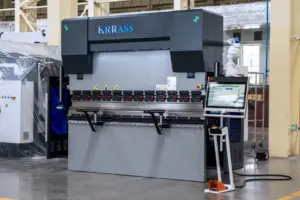
KRRASS is an experienced sheet metal equipment manufacturing partner that can help you take your design from concept to technical production line. Whether you are a startup looking to bring a new product to market or an established company seeking to streamline your manufacturing processes, our team can provide the expertise and support you need.
At KRRASS, we understand the importance of manufacturability and how it can impact the success of your product. Our team of experts is equipped with the latest tools and technologies to provide a comprehensive design for manufacturing (DFM) analysis. We will work closely with you to optimize your sheet metal processing line and identify potential problems early to minimize the risk of production delays or quality issues.
Our manufacturing facilities are equipped with the latest equipment and technology. We can meet the needs of a variety of industries, including aerospace, automotive, medical, and consumer products.
When you partner with KRRASS, you can trust that your sheet metal fabrication equipment will be delivered on time, on budget, and with the highest quality standards. Contact us today to learn more about how we can help bring your design to life and accelerate your time to market.