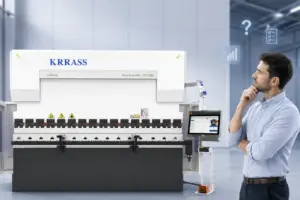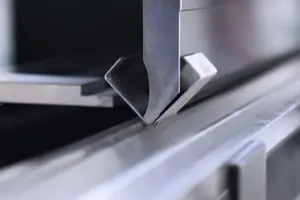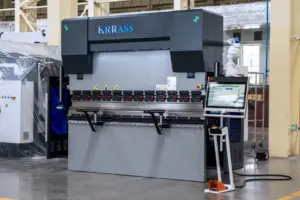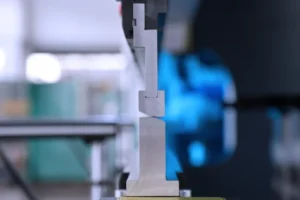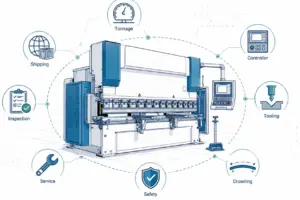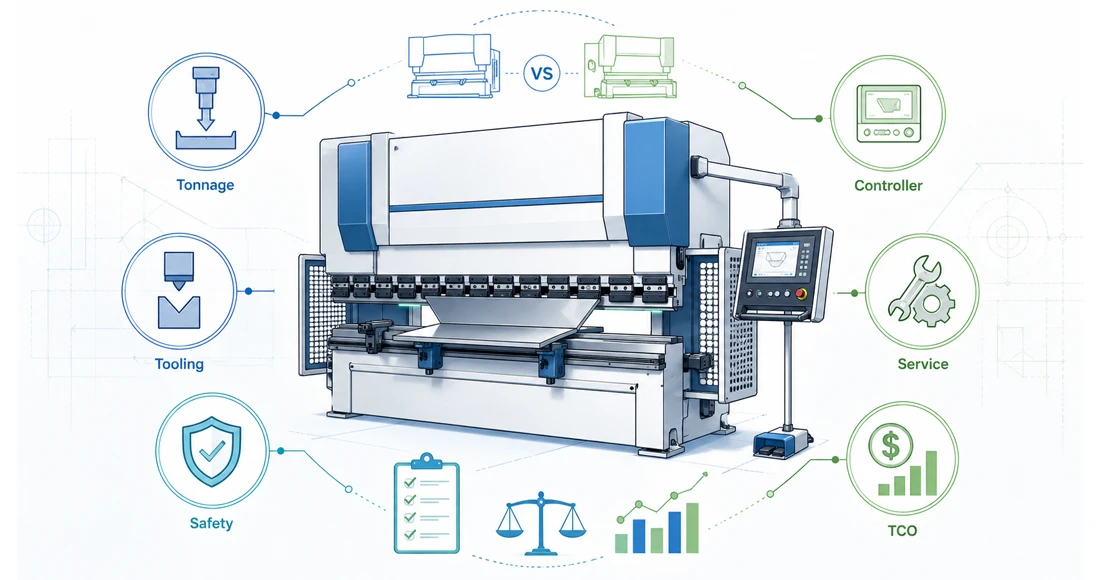
When a buyer searches for a press brake for sale, the first visible comparison is usually simple: tonnage, bending length, controller brand, number of axes, price, delivery time, and maybe a few photos. In real sheet metal production, however, a press brake is not only a machine frame with a hydraulic or servo-electric drive system. It is a bending system. The final result depends on the frame structure, ram control, backgauge accuracy, tooling, crowning method, safety configuration, software, operator habits, maintenance access, and the supplier's ability to support the machine after installation.
At KRRASS, we build and supply press brakes for global sheet metal factories, and we see the same purchasing problem in many markets. Two machines may look similar in a quotation, yet they can perform very differently after six months of real production. One machine may be suitable for simple brackets and panels, while another is built for high-mix fabrication, stainless steel cabinets, enclosure production, architectural metalwork, elevator parts, HVAC ducts, electrical cabinets, or contract manufacturing. A good purchase is not only the lowest initial price. It is the machine that bends the required parts accurately, safely, repeatedly, and economically over its full working life.
This guide explains what buyers should compare before ordering a press brake. It is written for purchasing managers, factory owners, engineers, production supervisors, and distributors who need a practical decision framework. We will use common industry rules, example calculations, and buying tables so that the comparison is easier to apply. We will also connect the discussion with KRRASS press brake options, including our Ассортимент продукции для листогибочных прессов, CNC press brake models, and related guides such as our Направляющая для инструмента листогибочного пресса.
Оглавление
Start with the parts, not the machine label
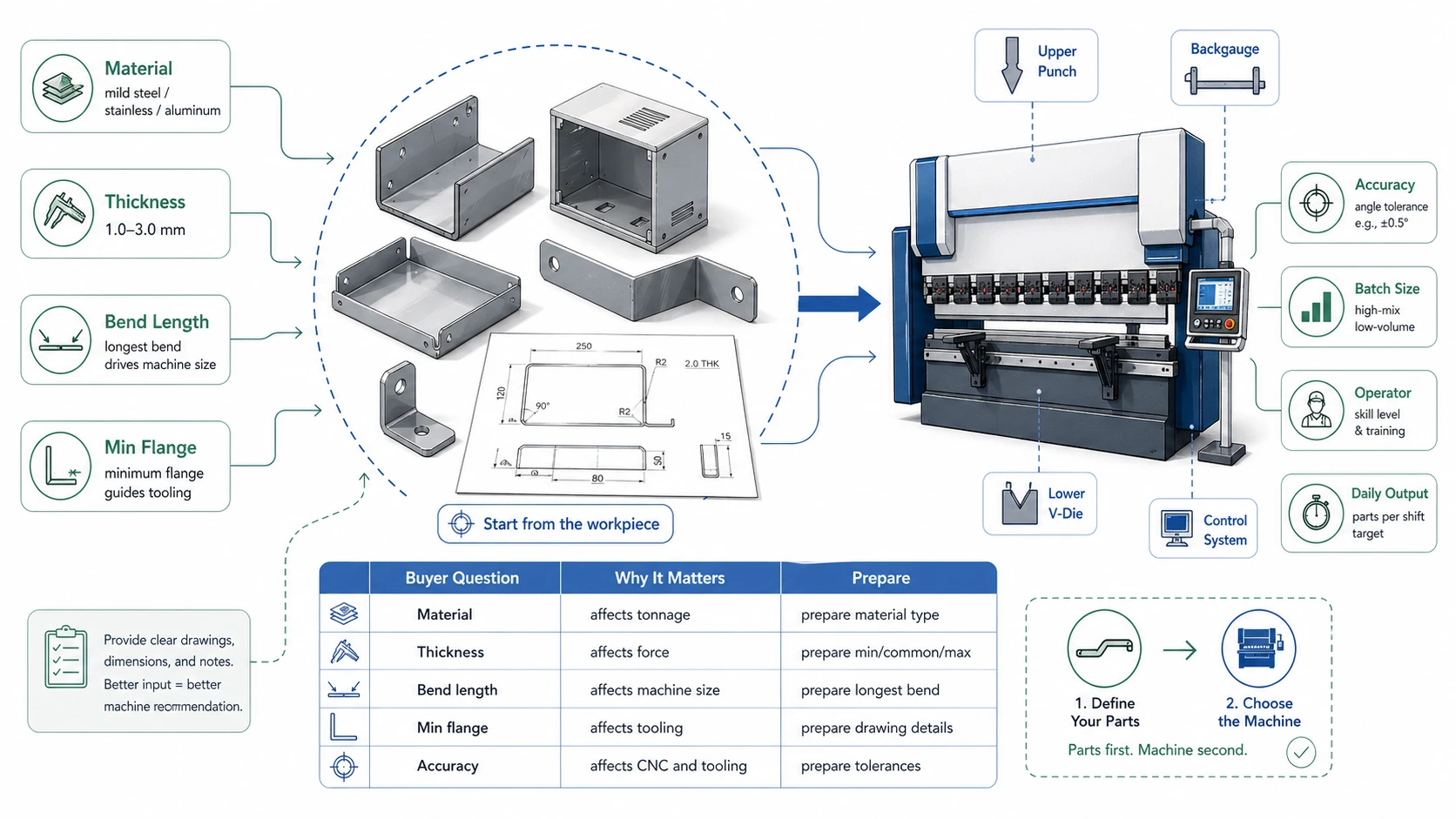
The best press brake selection starts from the workpiece. A common purchasing mistake is to begin with a machine name such as "100 ton press brake" or "3200 mm CNC press brake" without first defining the parts that the factory must bend. This can lead to a machine that has enough nominal tonnage but not enough open height, enough bending length but poor backgauge suitability, or an attractive controller but insufficient tooling.
Before comparing quotations, buyers should collect a simple production profile. It does not need to be complicated, but it should include the material type, thickness range, maximum bend length, minimum flange, inside radius requirement, angle tolerance, batch size, drawing format, and expected daily workload. For many factories, the most important parts are not the largest parts. The most profitable parts may be medium-size components that need fast setup, stable repeatability, and reduced operator dependence.
A factory that bends mostly 1.0-3.0 mm mild steel panels has a different requirement from a factory that bends 6.0-10.0 mm structural parts. A buyer producing electrical cabinets may care strongly about cosmetic surfaces and repeatable flange dimensions. A buyer making agricultural equipment may care more about heavy tonnage, rugged tooling, and easy maintenance. A job factory with many short batches may benefit from CNC control, multi-axis backgauge, quick clamping, and segmented tooling. A factory with long repeat jobs may prioritize speed, reliability, and simple operation.
The following table is a practical way to convert part requirements into machine requirements before requesting a quotation.
| Buyer question | Why it matters | What to prepare before ordering |
|---|---|---|
| What materials will be bent most often? | Material strength changes tonnage and springback. | Mild steel, stainless steel, aluminum, galvanized sheet, high-strength steel, and tensile strength if available. |
| What is the normal thickness range? | Thickness strongly affects required force. | Minimum, common, and maximum thickness values. |
| Какова максимальная длина изгиба? | Determines machine length and tonnage distribution. | Maximum bend length and whether it occurs daily or only occasionally. |
| What is the shortest flange? | Limits V-die opening and tooling choice. | Minimum flange dimensions from drawings. |
| What accuracy is required? | Determines CNC level, crowning, tooling quality, and backgauge axes. | Angle tolerance, flange tolerance, and cosmetic requirements. |
| What is the production pattern? | Determines controller, tooling, clamping, and automation value. | High-mix low-volume, batch production, or repetitive production. |
| What operators will use it? | Determines training and interface needs. | Experience level, preferred language, and safety discipline. |
This part-first approach also helps avoid overbuying. Not every factory needs the most complex press brake. At the same time, underbuying can be more expensive than buying a properly configured machine because it creates scrap, rework, slow setup, and lost production capacity.
Compare tonnage with a real bending calculation
Tonnage is one of the most visible specifications in any press brake for sale. Buyers often compare 100 ton, 160 ton, 220 ton, or 320 ton machines as if tonnage alone defines capability. Tonnage is important, but it must be checked against material, thickness, bending length, V-die opening, and bending method.
For air bending, a common simplified relationship is that required force increases with tensile strength, bend length, and the square of material thickness, while it decreases when the V opening becomes larger. This is why a small increase in thickness can create a much larger increase in required force. Industry tonnage charts, including air bend force charts published by tooling manufacturers such as Инструмент Уилсона, are useful because they show the relationship between material thickness, V opening, minimum flange, inside radius, and required tonnage.
For initial planning, buyers can use this simplified metric estimate for mild steel air bending:
Approximate force per meter = 1.42 x tensile strength factor x thickness² / V opening x 100
Different suppliers and charts use different constants, units, and safety factors, so this formula should not replace a supplier's engineering check. It is still useful because it shows the logic: thickness is squared, V opening matters, and material strength matters.
A practical example is easier to understand. Suppose a factory wants to bend 3 mm mild steel over 2500 mm using a 24 mm V opening. If a reference chart shows about 21 tons per meter for 3 mm mild steel with a 24 mm die opening, the 2500 mm bend needs about 52.5 tons before adding a safety margin. With a 20% planning margin, the buyer should plan for about 63 tons. A 100 ton machine may be comfortable for that job. But if the same factory later bends 6 mm over 3000 mm, the requirement rises dramatically.
| Example material and setup | Reference force per meter | Длина изгиба | Estimated total force | Suggested planning margin | Practical machine implication |
|---|---|---|---|---|---|
| 2 mm mild steel, V16, air bending | ~12 t/m | 2500 mm | ~30 t | 20% | Suitable for many light-duty machines. |
| 3 mm mild steel, V24, air bending | ~21 t/m | 2500 mm | ~52.5 t | 20% | A 100 ton class machine gives comfortable margin. |
| 4 mm mild steel, V32, air bending | ~33 t/m | 3000 мм | ~99 t | 20% | A 125-160 ton class machine is often more realistic. |
| 6 mm mild steel, V50, air bending | ~58 t/m | 3200 mm | ~186 t | 20% | A 220 ton class machine may be needed depending on tooling and material. |
| 3 mm stainless steel, V24, air bending | mild steel value x material factor | 2500 mm | higher than mild steel | 20%+ | Stainless usually needs more force and springback allowance. |
These values are planning examples, not a universal guarantee. The actual force depends on material grade, tensile strength, tooling geometry, bend angle, lubrication, and machine condition. But the table makes one point clear: a quotation that only says "press brake 100T/3200" is not enough. The buyer should ask whether the machine can bend the real parts with the selected tooling and a safe working margin.
At KRRASS, when we discuss a press brake for sale with a buyer, we prefer to check representative drawings or at least the common material-thickness-length combination. This reduces the risk of choosing a machine that looks affordable but becomes overloaded in real production.
Do not compare bending length without checking usable length
Bending length is another headline specification. A 3200 mm press brake is commonly selected for 3000 mm sheets, while 4000 mm, 6000 mm, or longer machines are used for larger panels. However, nominal bending length does not always mean every part can be bent comfortably.
The buyer should check three practical issues. First, the maximum bend length should fit within the machine's working length with enough handling allowance. Second, the machine must have enough tonnage over that length. Third, the factory must have enough space and material handling capacity. Long thin sheets can sag, scratch, or twist if they are not supported properly. For large panels, front support arms, sheet followers, or custom handling devices may be as important as the machine itself.
For many sheet metal factories, a 3200 mm press brake is a flexible standard choice because it can process common 8-foot and 10-foot class workpieces. But if the actual parts are mostly under 1000 mm, a shorter and faster machine may be more efficient. If the factory frequently bends long panels, doors, elevator parts, HVAC sections, or large enclosures, a longer bed may be necessary.
| Nominal machine length | Типичный сценарий использования | Buyer caution |
|---|---|---|
| 1600-2000 mm | Small brackets, cabinets, narrow panels, short-batch work | Fast and compact, but not suitable for long sheets. |
| 2500-3200 мм | General fabrication, electrical cabinets, doors, panels, job factory use | Most common range; compare tonnage and tooling carefully. |
| 4000 mm | Long panels, architectural metal, HVAC, larger enclosures | Requires more floor space and better sheet handling. |
| 6000 mm and above | Large industrial panels, heavy fabrication, special projects | Must check deflection, crowning, logistics, foundation, and handling. |
A serious supplier should also explain how the machine frame and crowning system maintain angle consistency over the working length. A long machine without good crowning control can produce different angles at the center and ends of the part.
Compare machine type: NC, CNC, hydraulic, hybrid, or electric
The phrase press brake for sale covers several machine types. Buyers should not assume that all press brakes serve the same production strategy. The most common categories are NC hydraulic press brakes, CNC hydraulic press brakes, hybrid press brakes, and servo-electric press brakes. Each type has a valid place.
An NC press brake is often suitable for basic bending, lower investment, simpler operation, and factories that do not require frequent complex setups. A CNC hydraulic press brake gives better control of ram position, backgauge movement, bending programs, multi-step parts, and repeatability. A hybrid press brake combines hydraulic force with servo-controlled energy-saving operation. A servo-electric press brake is attractive for clean operation, high efficiency, low oil dependence, and fast response, especially in lighter and medium bending ranges.
KRRASS offers multiple press brake categories, including NC, CNC, hydraulic, hybrid, and electric press brake options through our press brake range. For buyers comparing CNC models, our CNC press brake list provides a useful starting point for controller, backgauge, and customization discussions.
| Тип машины | Сильные стороны | Ограничения | Suitable buyer profile |
|---|---|---|---|
| Гидравлический листогибочный пресс с ЧПУ | Lower initial cost, simple operation, familiar maintenance | Less automation and lower setup efficiency than CNC | Basic bending, simple parts, budget-focused factories. |
| Гидравлический листогибочный пресс с ЧПУ | Good accuracy, programmable control, flexible tooling, broad tonnage range | Higher price and training requirement than NC | General sheet metal factories, cabinet makers, job shops. |
| Гибридный листогибочный пресс | Energy-saving hydraulic architecture, strong force, precise control | More complex than standard hydraulic systems | Buyers who need power plus lower energy use. |
| Сервоэлектрический листогибочный пресс | High efficiency, cleaner operation, fast response, less hydraulic maintenance | Usually better for certain tonnage ranges and part profiles | High-mix production, clean factories, precision light-to-medium bending. |
The correct choice depends on the work. If the factory bends mostly simple channels and angles, a well-built NC or standard CNC hydraulic press brake may be enough. If the factory changes jobs frequently, imports DXF files, needs high repeatability, or wants less dependence on operator experience, CNC control becomes more valuable. If energy consumption, cleanliness, and maintenance are major concerns, buyers should also study servo-electric options such as the KRRASS EPP series, which we explain in our electric press brake guide.
Evaluate the frame, ram, and mechanical structure
The frame is the foundation of bending accuracy. A press brake frame must resist deflection under load. When the ram and worktable deflect, the bend angle changes along the length of the part. This is why two machines with the same tonnage can produce different results: frame design, steel plate quality, welding, stress relief, machining accuracy, and assembly control all matter.
Buyers should compare the side frames, worktable, ram, throat depth, open height, stroke, and distance between columns. These dimensions affect not only bending capacity but also part clearance and collision risk. A machine with insufficient open height may struggle with tall tools or deep box parts. A machine with insufficient throat depth may limit flange return or large panel handling. A machine with limited stroke may not work well with certain tooling combinations.
A useful structural comparison should include these items:
| Structural item | What it affects | What the buyer should ask |
|---|---|---|
| Frame rigidity | Angle consistency and long-term accuracy | How is the frame welded, stress relieved, and machined? |
| Ram guidance | Repeatability and ram parallelism | What guide system and control feedback are used? |
| Глубина горла | Part clearance behind the tooling | Can my return flanges and large panels fit? |
| Open height | Tooling height and part removal | Can I use tall punches, special dies, and box tools? |
| Строк | Bending and tool setup flexibility | Is the stroke enough for my tooling package? |
| Column distance | Usable space between frames | Can long parts pass between the side frames when needed? |
| Worktable design | Crowning and tooling support | Is mechanical, hydraulic, or CNC crowning available? |
A strong machine frame does not eliminate the need for crowning, but it makes the whole bending system more stable. When a supplier only promotes controller brand and ignores mechanical construction, the buyer should be careful. The controller can only command the machine. The frame must physically hold accuracy under load.
Compare crowning systems carefully
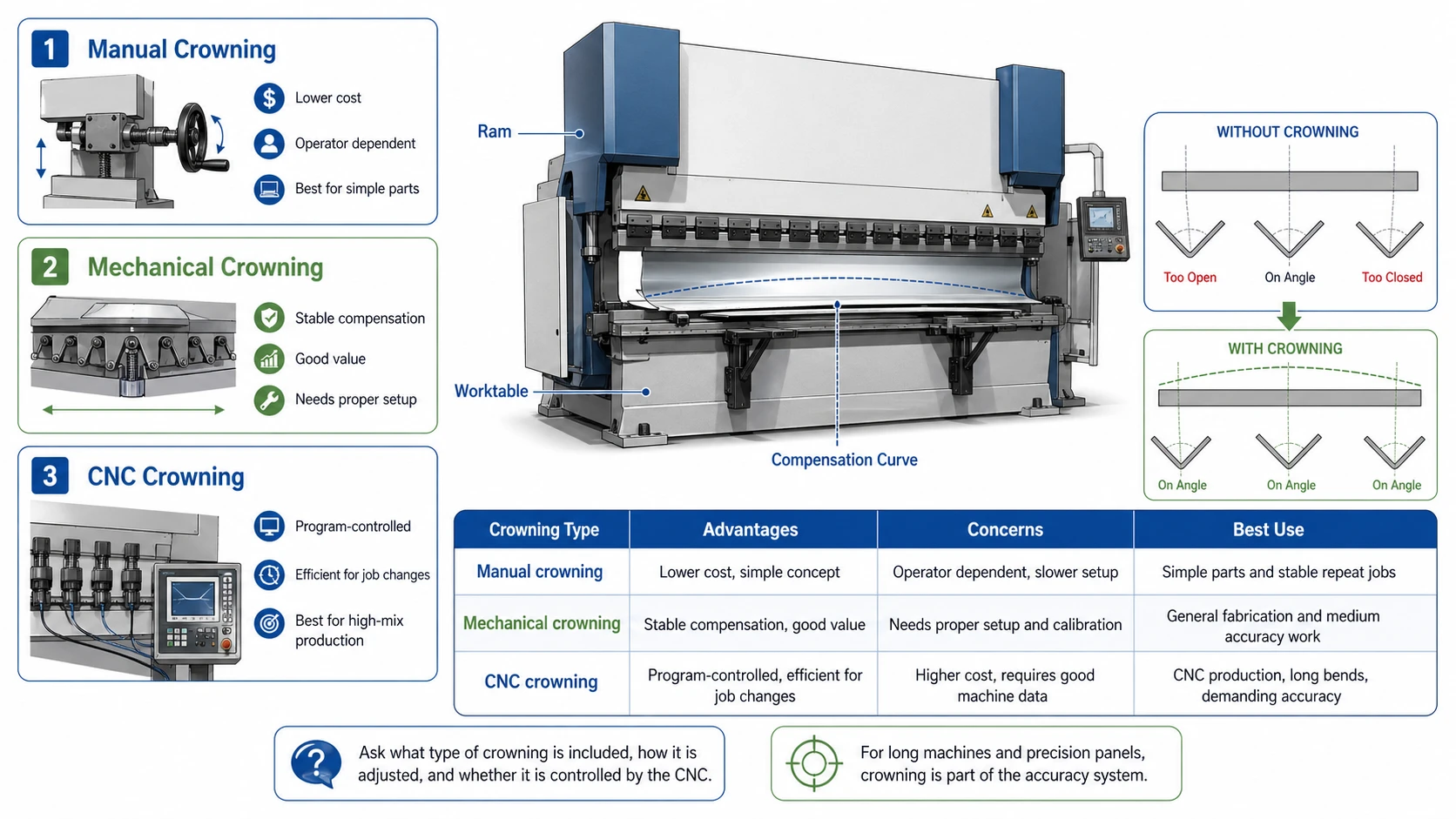
Crowning compensates for deflection in the ram and worktable. Without crowning, a long bend may be correct at the ends but open in the center, or correct in the center but over-bent at the ends. The longer the bend and the higher the tonnage, the more important crowning becomes.
There are three common approaches: manual crowning, mechanical crowning, and CNC-controlled crowning. Manual systems can be cost-effective for simpler production but rely more on operator adjustment. Mechanical crowning uses wedges or related mechanisms to create a controlled compensation curve. CNC crowning can adjust according to program data, material, thickness, length, and tooling setup, making it more practical for high-mix production.
| Crowning type | Преимущества | Concerns | Best use |
|---|---|---|---|
| Manual crowning | Lower cost, simple concept | Operator dependent, slower setup | Simple parts and stable repeat jobs. |
| Механическое корончатое протезирование | Stable compensation, good value | Needs proper setup and calibration | General fabrication and medium accuracy work. |
| CNC crowning | Program-controlled, efficient for job changes | Higher cost, requires good machine data | CNC production, long bends, demanding accuracy. |
When comparing a press brake for sale, buyers should not simply ask whether crowning is included. They should ask what type, how it is adjusted, whether it is controlled by the CNC, and whether the supplier can explain the compensation logic. For long machines and precision panels, crowning is not a luxury option. It is part of the accuracy system.
Study the controller and software workflow
A CNC controller affects setup speed, repeatability, operator confidence, and the ability to manage complex parts. Buyers often recognize controller brands such as DELEM, CYBELEC, ESA, and others. Brand matters, but the more important question is whether the controller matches the factory's workflow.
A simple controller may be enough for straightforward bending. A more advanced graphical controller can help operators visualize bend sequences, avoid collisions, manage tooling libraries, and reduce trial bends. For factories using CAD/CAM workflows, offline programming and DXF import may reduce setup time and improve consistency. For distributors, a controller with a familiar interface and language support can reduce training pressure.
When comparing controllers, buyers should ask:
| Controller feature | Why it matters in production |
|---|---|
| 2D or 3D graphical programming | Helps operators understand bend sequence and part orientation. |
| Tool library | Reduces setup mistakes and supports repeatable programs. |
| Material library | Helps with springback and bending parameter consistency. |
| DXF import | Saves programming time when drawings are available. |
| Offline software | Useful for engineering departments and high-mix production. |
| Multi-axis support | Needed for complex backgauge positioning. |
| Language options | Important for global factories and operator training. |
| Diagnostic functions | Helps maintenance teams find errors faster. |
At KRRASS, we configure CNC press brakes with controller options according to customer requirements. This is important because a buyer serving one market may prefer a different control interface from a buyer serving another market. The controller should not be selected only by reputation. It should support the daily operating method of the factory.
Compare the backgauge as a positioning system
The backgauge is not just an accessory. It determines flange position and supports repeatability across bends. A basic backgauge may only control the X axis. More advanced systems may include R axis, Z1/Z2 axis, X1/X2 axis, or additional axes depending on part complexity.
For simple straight bends, a basic backgauge can work well. For parts with different flange heights, step bends, asymmetrical parts, or complex profiles, a multi-axis backgauge can save setup time and reduce errors. The buyer should also compare ball screws, linear guides, servo motors, finger design, speed, positioning accuracy, and collision protection.
| Backgauge configuration | Main function | Suitable parts |
|---|---|---|
| X axis | Controls backgauge depth | Simple flanges and straight bends. |
| X + R axis | Controls depth and height | Parts with different flange levels. |
| X + R + Z1/Z2 | Adds horizontal finger positioning | Multi-station bending and variable part widths. |
| X1/X2 + R + Z axes | Allows independent depth positioning | Angled flanges and complex parts. |
| 6-axis or higher systems | Advanced positioning and flexibility | High-mix precision production. |
A buyer should not automatically choose the highest number of axes. More axes add cost and complexity. But too few axes can slow down production and force manual adjustments. The best configuration is the one that matches the part mix.
Tooling may decide whether the machine can do the job
A press brake without the right tooling is like a machine without a process plan. Punches, dies, adapters, clamps, segmented tools, gooseneck tools, hemming tools, radius tools, and special tools all influence what parts the machine can bend. Many purchasing problems happen because the machine is selected first and the tooling is treated as an afterthought.
Tooling affects minimum flange length, inside radius, surface marking, collision clearance, tonnage capacity, setup time, and operator safety. A wide V opening can reduce tonnage but may increase minimum flange length and inside radius. A narrow V opening can support shorter flanges but increases tonnage and may create marking. Gooseneck punches can help with return flanges and box shapes, but they have load limits. Segmented tooling can support boxes and small parts, but it must be safely clamped and organized.
Наш Направляющая для инструмента листогибочного пресса explains punch and die selection in more detail. For buying decisions, the key point is simple: the press brake quotation should include a tooling discussion, not only the machine body.
| Tooling factor | Buying impact | Common mistake |
|---|---|---|
| V-образное отверстие | Tonnage, radius, flange support | Using one die for too many thicknesses. |
| Punch style | Collision clearance and part shape | Choosing a straight punch for box parts that need gooseneck clearance. |
| Tool height | Open height and stroke requirements | Buying tools that do not fit comfortably in the machine. |
| Tool load rating | Safety and tool life | Assuming machine tonnage equals tool capacity. |
| Segmentation | Box bending and flexible setup | Not planning enough segment sizes. |
| Зажим | Setup speed and safety | Saving cost on clamping but losing time every day. |
| Surface protection | Cosmetic quality | Ignoring film, urethane, or special die protection for visible parts. |
A practical tooling package often includes standard punches and dies for common thicknesses, segmented punches for box bending, radius tools if needed, hemming tools if hems are required, and protective materials for stainless steel or painted sheets. Buyers should share part drawings so the supplier can identify collision risks before shipping.
Understand minimum flange length before selecting dies
Minimum flange length is one of the most overlooked purchasing details. In air bending, the sheet must rest on the die shoulders. If the flange is too short for the V opening, the part can become unstable, fall into the die, or produce inaccurate bends. This is why a wider V opening is not always better even though it reduces tonnage.
A common planning rule is that minimum flange length is roughly 70% of the V opening, although the actual value depends on die geometry, shoulder radius, material, thickness, and bend angle. Buyers should check real drawings, not only thickness.
| V-образное отверстие | Approximate minimum flange at 70% of V | Typical use note |
|---|---|---|
| 8 мм | 5.6 mm | Small thin sheet parts; careful handling needed. |
| 12 мм | 8.4 mm | Common for thin sheet work. |
| 16 мм | 11.2 mm | Useful for around 2 mm material in many cases. |
| 24 мм | 16.8 mm | Common planning choice for around 3 mm material. |
| 32 мм | 22.4 mm | Used for thicker sheets but limits short flanges. |
| 50 mm | 35.0 mm | Heavy bending; short flanges may be impossible. |
If a buyer needs a 10 mm flange on 3 mm material, a 24 mm V opening may not support the part well. The supplier may need to suggest another tooling strategy, different bend radius, special die, or design adjustment. This is why sending drawings before ordering can prevent expensive surprises.
Compare hydraulic system quality and maintenance access
For hydraulic press brakes, the hydraulic system affects force stability, ram movement, noise, maintenance, and service life. Buyers should compare pump type, valve system, cylinder quality, seals, oil tank design, filtration, cooling, hose routing, and ease of maintenance.
A stable hydraulic system should deliver controlled pressure and repeatable ram movement. Poor hydraulic design can cause heat, leakage, slow response, noise, or inconsistent bending. Maintenance access is also important. A machine that is difficult to inspect will not be maintained properly, especially in busy factories.
When comparing hydraulic machines, buyers should ask about:
| Hydraulic item | What to check |
|---|---|
| Main cylinders | Sealing quality, synchronization method, machining accuracy. |
| Valves | Brand, response, service availability, and control precision. |
| Насос | Noise, efficiency, reliability, and suitability for workload. |
| Oil filtration | Filter accessibility and contamination control. |
| Oil temperature control | Heat management under long production cycles. |
| Hose and pipe routing | Protection from abrasion, vibration, and service damage. |
| Maintenance space | Ease of checking oil, filters, valves, and seals. |
Hydraulic machines remain a strong choice for many factories because they cover a wide tonnage range and are familiar to maintenance teams. The buyer's goal is not to avoid hydraulics. The goal is to buy a hydraulic press brake with a reliable system and clear maintenance support.
Compare servo-electric and hybrid options by total operating cost
Servo-electric and hybrid press brakes are increasingly attractive because many factories care about energy efficiency, cleaner operation, reduced oil dependence, and faster response. However, buyers should compare them by application, not by trend.
A servo-electric press brake can be a strong option for precision light-to-medium bending, frequent job changes, and factories that prefer a cleaner production environment. Hybrid systems can offer strong bending force with reduced energy consumption compared with traditional hydraulic systems. The main questions are working range, tonnage requirement, duty cycle, maintenance capability, local service support, and return on investment.
| Сравнительный пункт | Traditional hydraulic | Гибридный | Servo-electric |
|---|---|---|---|
| Force range | Broad, especially high tonnage | Broad depending on design | Often strongest in selected light-to-medium ranges |
| Energy use | Higher during idle and operation | Lower than traditional hydraulic in many setups | Low during standby and efficient in operation |
| Oil system | Full hydraulic system | Reduced or optimized hydraulic use | Little or no hydraulic oil depending on design |
| Обслуживание | Familiar but requires oil and seal care | Requires hydraulic and servo knowledge | Requires servo drive and mechanical transmission knowledge |
| Чистота | Oil management needed | Improved but still hydraulic | Cleaner production environment |
| Best use | General fabrication and heavy bending | Power plus efficiency | Precision, clean, high-mix bending |
For many buyers, the best decision is not "hydraulic versus electric" in a general sense. The best decision is whether the machine's force curve, speed, tooling, and service model match the actual parts. KRRASS can support buyers in comparing traditional hydraulic, hybrid, and electric press brake options based on real production requirements.
Safety should be specified before the order is confirmed
Press brakes work with high force, and the operator may stand close to the tooling. Safety must be part of the purchasing discussion. In the United States, OSHA has long treated press brake safeguarding under general machine guarding requirements and has recognized ANSI B11.3 as a relevant consensus standard for power press brake safeguarding. OSHA's guidance on point-of-operation guarding for power press brakes is available through its press brake safeguarding directive. International buyers may also consider machinery safety frameworks such as ISO 13849-1, which addresses safety-related parts of control systems, and press brake-specific safety standards such as ISO 6909 or regional equivalents where applicable.
A safe press brake purchase may include light curtains, laser guards, safety PLC, two-hand control where appropriate, emergency stops, rear guarding, side guarding, interlocked doors, safe speed functions, foot pedal safety, warning labels, training documents, and clear maintenance procedures. The exact configuration depends on machine type, destination market, local regulation, and buyer requirement.
| Safety item | Why buyers should compare it |
|---|---|
| Front optical protection or laser guard | Helps protect the operator near the bending zone. |
| Emergency stop positions | Must be accessible from normal operating areas. |
| Rear and side guarding | Helps prevent access to backgauge and moving areas. |
| Safety-rated control system | Important for reliable safety functions. |
| Foot pedal design | Affects accidental activation risk and operator control. |
| Safe speed / mute logic | Important when forming small parts close to tooling. |
| Training and documentation | Safety devices are not enough without correct use. |
Safety devices should not be treated as decorative options. A buyer should ask what is included in the base machine, what is optional, and what is required for the destination market. The safest and most productive solution is planned before shipment, not improvised after installation.
Compare accuracy claims with measurable tolerances
Suppliers often describe machines as high precision, accurate, stable, or reliable. These words are useful only when they connect to measurable results. For a press brake, practical accuracy includes ram repeatability, backgauge positioning accuracy, angle consistency, flange dimension consistency, crowning compensation, and repeatability after tool changes.
Buyers should separate machine accuracy from bending result accuracy. Even a precise machine cannot fully eliminate material variation, grain direction, tooling wear, springback, and operator setup differences. A strong supplier explains both sides: what the machine can control and what the process must manage.
| Accuracy area | Machine-related factor | Process-related factor |
|---|---|---|
| Bend angle | Ram position, crowning, frame rigidity | Material springback, thickness variation, tooling condition. |
| Flange dimension | Backgauge accuracy, finger design | Part placement, sheet squareness, burr direction. |
| Повторяемость | Servo/hydraulic control, guide system | Tool setup, program management, operator method. |
| Long bend consistency | Crowning and frame stiffness | Material straightness and support. |
| Surface quality | Tool finish and protection | Material coating, handling, die marking. |
If a buyer needs tight tolerances, the supplier should ask for sample drawings and tolerance requirements. It may be necessary to recommend a higher-level CNC system, better crowning, precision tooling, angle measurement, or offline programming. For general fabrication, a practical and stable configuration may be more cost-effective than an overly complex system.
Check productivity beyond maximum speed
Press brake productivity is not only ram speed. Maximum approach speed looks attractive in a quotation, but real productivity comes from setup time, program preparation, tooling change time, backgauge movement, part handling, first-piece approval, and operator confidence.
A machine with fast ram movement but slow tool changes may not be productive in high-mix work. A machine with advanced control but poor tooling organization may still waste time. A machine with good CNC programming but no front support for large sheets may slow the operator. Buyers should compare the complete bending workflow.
| Productivity factor | Why it matters | Improvement option |
|---|---|---|
| Program creation | Affects setup time for new parts | Graphical CNC, DXF import, offline software. |
| Tool change time | Critical for high-mix production | Quick clamping, segmented tools, organized storage. |
| First-piece correction | Reduces scrap and trial bends | Good crowning, material library, skilled setup. |
| Part handling | Affects speed and safety | Front supports, sheet followers, helpers, lifting devices. |
| Backgauge movement | Affects multi-step bending | Servo backgauge, multi-axis positioning. |
| Operator training | Reduces errors | Clear manuals, training videos, supplier support. |
For buyers running a job factory, setup time may be more important than raw bending speed. For buyers running repeat production, cycle time and reliability may dominate. The press brake should be compared according to the factory's production rhythm.
Compare standard configuration and optional upgrades line by line
Many press brake quotations look similar at the top but differ significantly in the details. One supplier may include CNC crowning, quick clamps, quality tooling, servo backgauge, oil cooler, and advanced safety devices. Another may quote a lower price but leave these items optional or unspecified. Buyers should compare line by line.
A useful quotation comparison table should include machine body, controller, axes, crowning, tooling, clamping, hydraulic system, electrical components, safety devices, lubrication, front supports, software, spare parts, warranty, installation, training, and after-sales service.
| Quotation item | Supplier A | Supplier B | Supplier C | Decision note |
|---|---|---|---|---|
| Tonnage and bending length | Confirm against real parts. | |||
| Controller model | Check programming workflow. | |||
| Backgauge axes | Match part complexity. | |||
| Crowning type | Important for long bends. | |||
| Tooling included | Specify punch, die, length, segmentation. | |||
| Clamping system | Manual, quick, hydraulic, or pneumatic. | |||
| Safety package | Confirm destination requirements. | |||
| Front supports | Needed for large sheets. | |||
| Electrical components | Compare brand and serviceability. | |||
| Гидравлические компоненты | Compare valves, pump, seals, filtration. | |||
| Software and manuals | Important for training and maintenance. | |||
| Warranty and support | Clarify parts, labor, remote support. |
This table helps buyers avoid a common mistake: choosing the lowest quotation without realizing that essential production items were excluded. A lower upfront machine price can become a higher total project cost after tooling, safety, installation, and downtime are included.
Think in total cost of ownership, not only purchase price
The purchase price is important, but it is only one part of the financial decision. Total cost of ownership includes machine price, tooling, freight, import duties, installation, foundation, power supply, oil, consumables, training, maintenance, spare parts, downtime, scrap, rework, energy consumption, and resale value.
A press brake that saves 5% on purchase price but causes frequent setup errors may cost more over time. A machine with better tooling and faster setup may produce more sellable parts per day. A machine with better support may reduce downtime when a sensor, valve, controller, or backgauge component needs attention.
| Cost category | Often visible in quotation? | Why it matters |
|---|---|---|
| Machine price | Да | Initial investment and budget approval. |
| Tooling package | Иногда | Determines real bending capability. |
| Freight and insurance | Иногда | Large machines can have significant logistics cost. |
| Import duty and taxes | Нет | Depends on destination country. |
| Installation and commissioning | Иногда | Affects startup speed and accuracy. |
| Operator training | Иногда | Reduces scrap and unsafe operation. |
| Maintenance parts | Редко | Affects long-term service cost. |
| Energy use | Редко | Matters for high-duty production. |
| Downtime risk | Нет | Can be more expensive than spare parts. |
| Scrap and rework | Нет | Poor bending accuracy creates hidden cost. |
A better buying question is not "Which press brake is cheapest?" It is "Which press brake gives the lowest cost per good part for the work we actually produce?" That question leads to a more professional comparison.
Ask for documentation before shipping
Documentation is a practical sign of supplier maturity. Buyers should ask for technical specifications, machine layout, foundation or placement requirements, electrical requirements, controller manuals, hydraulic diagrams, electrical diagrams, maintenance instructions, spare parts list, tooling details, safety instructions, and packing information.
For global buyers, language support matters. A machine that arrives with unclear documentation creates unnecessary risk. Maintenance teams need diagrams and part numbers. Operators need clear procedures. Purchasing teams need commercial documents. Import teams need packing lists and compliance-related documents.
| Document | Цель |
|---|---|
| Технические характеристики | Confirms machine configuration and performance. |
| Machine layout drawing | Helps plan floor space and handling. |
| Electrical requirement | Helps prepare power supply before arrival. |
| Hydraulic diagram | Helps maintenance and troubleshooting. |
| Electrical diagram | Helps maintenance and fault diagnosis. |
| Tooling list | Confirms punch, die, segmentation, and tooling standard. |
| Safety instructions | Supports operator training and risk control. |
| Spare parts list | Helps prepare maintenance inventory. |
| Packing list | Supports logistics and import clearance. |
| Warranty terms | Clarifies responsibility and support scope. |
Before the balance payment and shipment, buyers should review the final configuration. This is especially important for custom machines, special voltages, special controllers, non-standard tooling, or destination-specific safety requirements.
Check installation conditions in the factory
A press brake needs more than floor space. The buyer should check floor capacity, machine access route, unloading method, crane or forklift capacity, foundation level, power supply, air supply if needed, oil preparation for hydraulic models, ambient temperature, humidity, dust, and operator working space.
Long and heavy machines require careful logistics planning. The factory should confirm whether the machine can pass through doors, turn inside aisles, and be placed safely. A 3200 mm machine may be easy for one factory and difficult for another because of the building layout.
| Installation item | What to confirm |
|---|---|
| Floor capacity and level | Machine weight, vibration, and leveling accuracy. |
| Unloading equipment | Forklift, crane, rigging tools, and safe lifting points. |
| Access route | Door height, aisle width, turning space. |
| Power supply | Voltage, phase, frequency, grounding, breaker capacity. |
| Working space | Operator area, rear access, tooling storage, material flow. |
| Среда | Dust, humidity, temperature, and oil management. |
| Foundation requirement | Especially important for large or high-tonnage machines. |
A good supplier can provide layout and preparation information before shipment. This helps the buyer avoid delays when the machine arrives.
Compare supplier support and response ability
A press brake is a long-term production asset. Supplier support matters before and after the sale. Before the order, the supplier should help check applications, drawings, configuration, tooling, safety, and shipping. After the order, the supplier should support production, inspection, packing, documentation, installation, training, and troubleshooting.
For international buyers, remote support is especially important. When a machine stops, the buyer needs clear communication, diagnostic help, and spare parts support. A supplier that responds quickly during the sales stage but slowly after shipment is a risk.
| Support stage | What a strong supplier should do |
|---|---|
| Inquiry | Ask about parts, material, thickness, length, accuracy, and budget. |
| Quotation | Provide clear configuration, options, and technical explanation. |
| Order confirmation | Confirm voltage, controller, safety, tooling, and delivery details. |
| Production | Share progress and clarify custom items. |
| Проверка | Provide test information, photos, videos, or inspection records. |
| Отгрузки | Prepare packing, documents, and logistics coordination. |
| Установка | Support leveling, oil, power, controller setup, and trial bending. |
| After-sales | Help with troubleshooting, spare parts, and training. |
KRRASS works with global buyers who need practical machine selection, not only catalog information. Our goal is to help customers choose a press brake that fits their production, budget, and long-term operation.
Compare by application: which press brake fits your factory?
Different factories need different press brakes. A buyer should avoid selecting a machine only because another factory uses it. The following application table gives a practical starting point.
| Factory type | Common parts | Recommended focus |
|---|---|---|
| Electrical cabinet factory | Doors, panels, enclosures, mounting plates | CNC control, crowning, surface protection, repeatability. |
| HVAC factory | Ducts, channels, thin sheet components | Long bending length, fast setup, suitable tooling, front support. |
| Job shop | Mixed custom parts | CNC control, multi-axis backgauge, quick clamping, tooling variety. |
| Elevator parts factory | Stainless panels, decorative parts, long bends | Surface protection, crowning, precision tooling, handling support. |
| Agricultural machinery factory | Thicker brackets and structural parts | Higher tonnage, rugged tooling, strong frame, hydraulic reliability. |
| Architectural metal factory | Long visible panels | Long bed, crowning, cosmetic tooling, careful handling. |
| Small fabrication factory | Brackets, covers, simple panels | Cost-effective NC or CNC model with practical tooling. |
| High-mix precision factory | Many drawings and frequent changes | Advanced CNC, offline programming, quick tooling, multi-axis backgauge. |
This table does not replace engineering selection, but it helps buyers identify the right comparison points. A cabinet factory and a heavy machinery factory may both search for a press brake for sale, but they should not buy the same configuration without checking their parts.
Ask the right questions before placing the order
A professional press brake inquiry should include a structured question list. This helps the supplier give a more accurate recommendation and helps the buyer compare responses objectively.
| Вопрос | Good answer should include |
|---|---|
| Can this machine bend my maximum material and length? | Calculation or explanation based on material, thickness, length, and V opening. |
| What tooling is included? | Punch type, die opening, length, segmentation, and standard. |
| What is the crowning system? | Manual, mechanical, or CNC, with explanation. |
| What controller is used? | Model, functions, language, axes, software options. |
| What backgauge configuration is included? | Axis count, guide/ball screw type, speed, accuracy, fingers. |
| What safety devices are included? | Front, rear, side, emergency, pedal, and control safety. |
| What is required for installation? | Power, oil, floor, space, unloading, and leveling. |
| What documents are supplied? | Manual, diagrams, parts list, layout, packing, warranty. |
| What is the after-sales process? | Remote support, spare parts, response method, service channels. |
| Can I send drawings for review? | A strong supplier should welcome drawings. |
If a supplier gives only a price and avoids technical questions, the buyer should be cautious. A press brake is not a commodity purchase like a small hand tool. It is a production system that must be matched to the factory.
Common mistakes when buying a press brake
The first mistake is buying by tonnage and length only. A 160 ton 3200 mm machine may be suitable for one factory and unsuitable for another. The buyer must check tooling, crowning, open height, stroke, backgauge, safety, and service.
The second mistake is ignoring tooling. Many bending problems are tooling problems, not machine body problems. If the die opening, punch shape, segmentation, or clamping system is wrong, the machine cannot deliver the expected result.
The third mistake is underestimating setup time. High-mix production needs fast programming, quick tool change, organized tool storage, and trained operators. A machine that is powerful but slow to set up may reduce factory efficiency.
The fourth mistake is choosing the lowest quotation without comparing included items. Two quotations may differ in controller, crowning, safety, tooling, backgauge, electrical components, and support. The lower price may simply mean fewer production-ready items.
The fifth mistake is failing to check safety requirements. Safety configurations should be planned before shipping. Retrofitting safety devices later can be more expensive and less integrated.
The sixth mistake is not sending drawings. A few representative drawings can reveal flange issues, collision risks, tooling needs, and tonnage requirements. This is one of the simplest ways to improve selection accuracy.
A practical buyer scoring table
For final comparison, buyers can use a weighted scoring table. The weight can be adjusted according to factory priorities. For example, a job shop may give more weight to CNC workflow and tooling flexibility, while a heavy fabrication factory may give more weight to tonnage, frame strength, and hydraulic reliability.
| Evaluation area | Suggested weight | Supplier 1 score | Supplier 2 score | Supplier 3 score |
|---|---|---|---|---|
| Machine capacity matches real parts | 15% | |||
| Frame structure and rigidity | 10% | |||
| Controller and programming workflow | 10% | |||
| Backgauge configuration | 8% | |||
| Crowning system | 8% | |||
| Tooling package | 12% | |||
| Safety configuration | 10% | |||
| Maintenance access and component quality | 8% | |||
| Documentation and training | 6% | |||
| Послепродажная поддержка | 8% | |||
| Total cost of ownership | 5% |
This type of table makes the decision more transparent. It also helps purchasing teams communicate with engineering and production departments. Instead of arguing only about price, the team can discuss measurable value.
Why buy a press brake from KRRASS
KRRASS focuses on sheet metal forming equipment for global customers, including прессовые тормоза, гидравлические ножницы, станки для лазерной резки волоконным лазером, и станки для металлообработки. This matters because many factories do not buy a press brake alone. They may also need shearing before bending, laser cutting before forming, or punching and notching for structural parts. A supplier that understands the full sheet metal process can support a more complete production plan.
For press brake buyers, we can help compare NC, CNC, hydraulic, hybrid, and electric options. We can discuss bending length, tonnage, controller, backgauge, crowning, tooling, safety devices, and production layout. We also provide information for related equipment. For example, buyers planning a cutting and bending line can review our fiber laser cutting machine range and our article on how to choose a fiber laser cutting machine. Buyers planning plate cutting before bending can review our hydraulic shearing machine range and related shearing machine guides.
Our role is not only to sell a machine. It is to help the buyer reduce selection risk. A good press brake should match real parts, fit the factory, meet safety expectations, support operators, and provide stable bending over many years.
Final checklist before ordering
Before confirming a press brake order, buyers should complete this checklist:
| Checklist item | Completed? |
|---|---|
| Representative drawings or part list prepared | |
| Material type and thickness range confirmed | |
| Maximum bend length confirmed | |
| Minimum flange checked against V opening | |
| Tonnage calculated with safety margin | |
| Machine type selected based on production need | |
| Controller and backgauge axes confirmed | |
| Crowning type confirmed | |
| Tooling package specified in writing | |
| Safety devices confirmed for destination market | |
| Installation conditions checked | |
| Power supply and voltage confirmed | |
| Documentation requirements listed | |
| Warranty and after-sales process clarified | |
| Spare parts and maintenance plan discussed |
Заключение
Searching for a press brake for sale is easy. Choosing the right press brake is a more serious decision. Buyers should compare more than tonnage, bending length, and price. A professional comparison must include real part requirements, bending force, tooling, crowning, controller workflow, backgauge configuration, frame structure, safety, maintenance, documentation, installation, and after-sales support.
The right machine is the one that produces accurate parts at a reasonable cost, supports safe operation, and fits the factory's long-term production plan. For some buyers, that may be a cost-effective NC hydraulic press brake. For others, it may be a CNC hydraulic press brake with multi-axis backgauge and CNC crowning. For clean and efficient production, a servo-electric or hybrid press brake may be the better direction. The best choice depends on the work.
At KRRASS, we recommend that buyers share drawings, material information, production goals, and factory conditions before ordering. With that information, we can help compare machine models, tooling packages, and configuration options more accurately. A press brake is a long-term investment. When it is selected correctly, it becomes a reliable center of sheet metal production, not just another machine on the factory floor.