
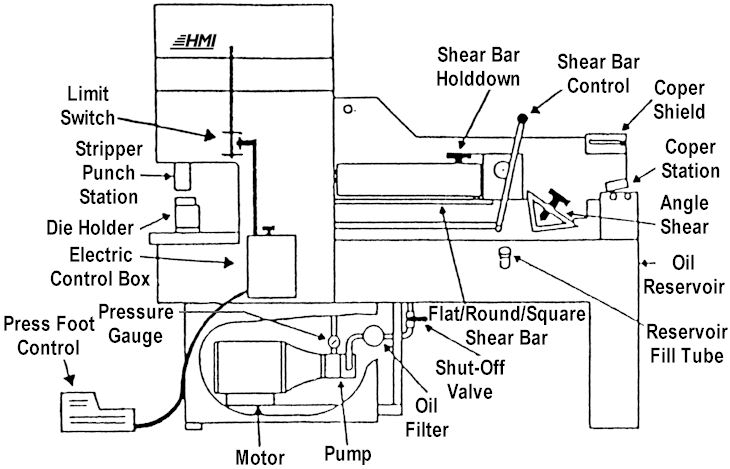
Une poinçonneuse hydraulique est un outil de traitement des métaux utilisé dans l'industrie de la fabrication de l'acier, capable de cisailler, de couper et de perforer. C'est le type le plus couramment utilisé machine à ferraille Elle est utilisée dans des secteurs tels que la métallurgie, la construction de ponts, les communications, l'énergie électrique et la défense. Aujourd'hui, je vous propose une présentation complète et détaillée de la poinçonneuse hydraulique, sous différents angles, afin que vous puissiez mieux la comprendre et l'utiliser. En espérant que cela vous soit utile.
Table des matières
Qu'est-ce qu'une poinçonneuse hydraulique ?
A machine à ferraille hydraulique est un équipement industriel polyvalent utilisé pour couper, poinçonner, entailler et plier différents types de métaux. On la trouve couramment dans les ateliers de métallurgie, les ateliers de fabrication et les usines de production. La machine fonctionne grâce à l'énergie hydraulique qui génère la force nécessaire aux différentes opérations de travail des métaux.
Fonctions multiples
Coupe:
Elle permet de découper facilement les barres plates, les cornières, les tiges rondes et carrées, et même les profilés en acier de construction. Cela la rend utile pour la fabrication de pièces aux dimensions précises en métallurgie.
Encoches :
Ces machines permettent d'entailler les tôles et les plaques métalliques selon des angles précis, facilitant ainsi l'assemblage des pièces lors de la fabrication. Cette fonction est particulièrement utile pour la réalisation de joints dans les structures métalliques.
Flexion :
Certaines poinçonneuses hydrauliques sont équipées d'accessoires de cintrage permettant de cintrer barres, tubes et plaques métalliques en diverses formes. Ceci accroît la polyvalence de la machine et lui permet de réaliser un large éventail de travaux de métallurgie.
Tonte:
Outre la découpe de barres et de plaques plates, les poinçonneuses hydrauliques peuvent également cisailler des profilés métalliques tels que des cornières et des poutres en U. Elles permettent ainsi de découper rapidement et précisément des pièces métalliques aux dimensions voulues.
Stations multiples
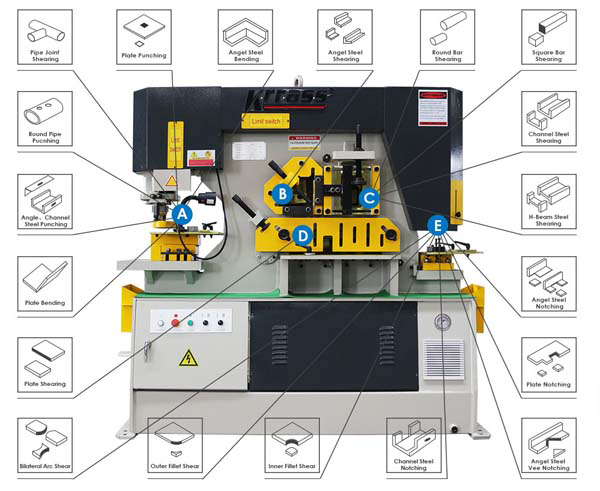
Poste de poinçonnage
Toutes les opérations de poinçonnage de la poinçonneuse sont réalisées par un système hydraulique, ce qui lui confère une grande efficacité et un fonctionnement silencieux. Le poinçonnage est silencieux, puissant et performant. L'appareil peut être utilisé pour poinçonner aussi bien des métaux épais que des matériaux minces superposés. Les déchets de découpe sont évacués simultanément et par couches. La table de poinçonnage se compose de deux parties : la bride de poinçonnage et le porte-pièce. Différents porte-pièces sont disponibles selon les matériaux. Le porte-pièce empêche le matériau de revenir avec le poinçon après la découpe.
Station de cisaillement pour barres plates
Le poste de cisaillement de la poinçonneuse est équipé de mécanismes de fixation simples et robustes. En fonction de la capacité de coupe de la machine, il est réglable pour toute épaisseur d'acier. La capacité de cisaillement peut atteindre 450 mm (17,71 pouces) pour les barres plates ou la découpe de profilés d'angle. Les lames de cisaille, conçues pour la production en série, sont réversibles (la lame supérieure possède deux arêtes de coupe et la lame inférieure quatre), garantissant ainsi une coupe nette et un minimum de déformation, pour une épaisseur minimale de 3 mm (1/8 pouce).
Station de découpe de barres
Les machines standard sont équipées de lames pour la découpe de profilés en U. Les bords sont maintenus par des mâchoires efficaces, ce qui permet une mise en place aisée de l'équipement sur la machine sans réglage supplémentaire. Grâce à d'autres équipements, la découpe de profilés en I, en T et de barres métalliques rondes et carrées est possible.
Poste d'encochage de la machine à poinçonner
Grande adaptabilité : grâce aux interfaces QBH, QCS et autres interfaces à fibre optique, il peut être adapté à divers dispositifs laser courants.
Conception d'excellence : La configuration optique optimisée et la conception du flux d'air fluide et efficace améliorent considérablement la qualité et l'efficacité de la coupe.
Station de cisaillement d'angle
Cette station permet la découpe de grands angles avec une capacité allant de 17 3/4 pouces à 35 1/2 pouces.
Caractéristiques
Les principales caractéristiques d'une machine de poinçonnage hydraulique peuvent être les suivantes :
- Cadre en acier précis et robuste
- Commandes de course réglables avec indicateurs sur les deux cylindres
- Système hydraulique avec protection contre les surcharges
- Facile à entretenir
- Peut être arrêté en cas d'urgence à l'aide de l'interrupteur
- Grande table de découpe plate avec guide de règle
- 2 vérins hydrauliques indépendants
Comment travaille un ferrailleur ?
Une poinçonneuse typique se compose d'un châssis fixe, d'un moteur, de protections, des pièces métalliques à usiner et d'un panneau de commande/pédale. La plupart des machines sont à commande électronique et/ou hydraulique, et leur principe de fonctionnement est généralement le suivant :
- La plaque coulissante munie d'un bord tranchant permet de cisailler les matériaux métalliques contre un bord fixe.
- Poinçon mobile permettant de réaliser des trous personnalisables dans divers matériaux métalliques.
- Le piston ou le bras coulissant servant à forcer les produits métalliques autour d'un point fixe ou dans une matrice.
Un seul opérateur peut effectuer la plupart des actions à l'aide d'une pédale ou d'un bouton, de nombreuses actions étant souvent répétées rapidement pour assurer un flux de production constant.
En raison des forces importantes nécessaires pour plier et couper le métal, les transmissions hydrauliques sont courantes sur les machines de travail du métal.
Capacités générales d'une machine à poinçonner les métaux
Une poinçonneuse peut se présenter sous différentes formes et dimensions, chacune ayant des spécifications différentes. Par exemple, son poids peut varier de 1 500 kg à plus de 12 000 kg, la force de coupe correspondante allant de 600 kN à 2 500 kN.
Les ferrailleurs peuvent découper des plaques de 16 mm à 40 mm d'épaisseur, perforer du métal jusqu'à 35 mm d'épaisseur et découper des profilés jusqu'à 300 mm.
Selon la taille de la machine, on peut y introduire des pièces métalliques de différentes longueurs ; il est possible de cisailler des plaques plates jusqu’à 750 mm de longueur. Cela rend ces machines extrêmement polyvalentes et constitue un atout précieux pour tout atelier de métallurgie.
Types de machines à travailler le fer
Il existe deux principaux types de machines à creuser les trous : les machines à creuser les trous mécaniques et les machines à creuser les trous hydrauliques.
Les poinçonneuses mécaniques sont actionnées par un système mécanique, généralement un volant d'inertie et un embrayage. Elles sont souvent actionnées manuellement ou à l'aide de pédales. Ces machines sont fiables et efficaces pour les opérations de travail des métaux à petite échelle.
Les poinçonneuses hydrauliques utilisent la force hydraulique pour effectuer des opérations de découpe, de poinçonnage, d'entaillage et de pliage. Elles offrent une précision, une puissance et une polyvalence supérieures aux poinçonneuses mécaniques.
Les poinçonneuses hydrauliques sont très répandues dans les ateliers de fabrication métallique et les usines de production de taille moyenne à grande.
La machine à poinçonner la plus répandue est la machine à poinçonner hydraulique. Elle est en effet adaptée au traitement de petites pièces et peut fonctionner simultanément sur plusieurs postes.
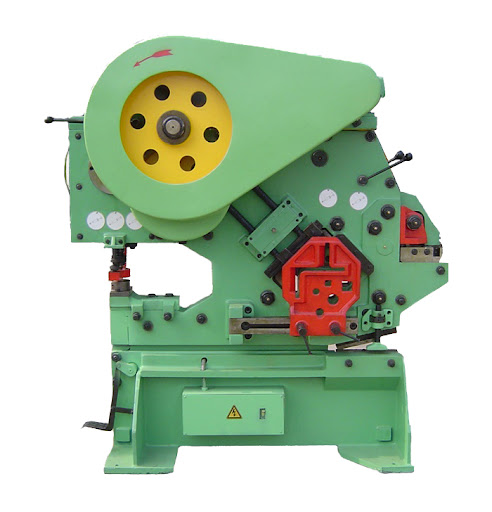
Voici une comparaison entre les machines de poinçonnage mécanique et hydraulique :
Source d'alimentation : Les poinçonneuses mécaniques fonctionnent grâce à un système mécanique, généralement un volant d'inertie et un embrayage. Elles peuvent nécessiter une commande manuelle ou des pédales pour actionner les mécanismes de découpe, de poinçonnage et de pliage. Les poinçonneuses hydrauliques utilisent l'énergie hydraulique pour générer la force nécessaire aux opérations de découpe, de poinçonnage, d'entaillage et de pliage. Elles offrent généralement un meilleur contrôle de l'application de la force, permettant un usinage précis et efficace.
Vitesse: Les poinçonneuses mécaniques ont souvent une vitesse fixe, déterminée par la rotation du volant d'inertie. Bien qu'efficaces pour les opérations à petite échelle, leur vitesse peut être limitée par rapport aux poinçonneuses hydrauliques. Ces dernières offrent généralement des réglages de vitesse variables, permettant aux opérateurs d'adapter la vitesse à la tâche et au matériau traités. Il en résulte souvent des cadences de production globales plus élevées qu'avec les poinçonneuses mécaniques.
Entretien: Les poinçonneuses mécaniques ont généralement des mécanismes plus simples et nécessitent moins d'entretien que leurs homologues hydrauliques. Elles comportent souvent moins de pièces mobiles, ce qui réduit le risque de pannes mécaniques.
Coût: Les poinçonneuses mécaniques sont généralement moins chères à l'achat que les modèles hydrauliques. Elles peuvent constituer une option économique pour les petits ateliers ou les amateurs ayant de faibles volumes de production.
Forcer: Les poinçonneuses mécaniques peuvent présenter des limitations en termes de force qu'elles peuvent exercer par rapport aux modèles hydrauliques. Cela peut affecter leur capacité à manipuler efficacement des matériaux plus épais ou plus durs.
Versatilité: Les poinçonneuses hydrauliques sont extrêmement polyvalentes et capables d'effectuer une vaste gamme de travaux de métallurgie, notamment la découpe, le poinçonnage, l'entaillage et le pliage. Elles peuvent travailler facilement divers matériaux et épaisseurs.
Contrôle: Les poinçonneuses hydrauliques offrent un contrôle précis de la force appliquée, permettant des opérations d'usinage précises et répétables. Ce niveau de contrôle est particulièrement avantageux pour les tâches exigeant des tolérances serrées ou des formes complexes.
Machine de poinçonnage mécanique ou hydraulique : comment choisir
Les poinçonneuses mécaniques sont plus simples, plus économiques et plus faciles à entretenir, mais elles peuvent présenter des limitations en termes de vitesse, de force et de polyvalence. Les poinçonneuses hydrauliques, quant à elles, offrent une puissance, une vitesse, une polyvalence et un contrôle supérieurs, ce qui les rend parfaitement adaptées aux applications industrielles intensives et aux tâches exigeant précision et efficacité. Le choix entre poinçonneuses mécaniques et hydrauliques dépend en définitive de facteurs tels que le budget, les exigences de production et les besoins spécifiques de l'opération de travail des métaux.
Avantages et inconvénients de la poinçonneuse hydraulique
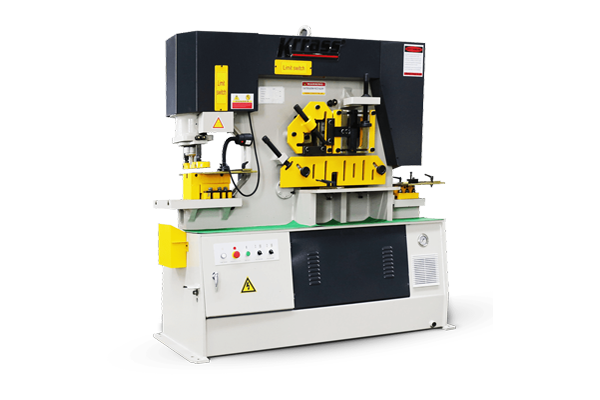
Les poinçonneuses hydrauliques présentent plusieurs avantages et inconvénients par rapport aux autres types de poinçonneuses, comme les modèles mécaniques. Voici quelques-uns des principaux avantages et inconvénients des poinçonneuses hydrauliques :
Avantages :
Versatilité: Les poinçonneuses hydrauliques sont des machines très polyvalentes capables d'effectuer de multiples opérations de travail des métaux, notamment la découpe, le poinçonnage, l'entaillage et le pliage. Cette polyvalence les rend adaptées à une large gamme de tâches et de matériaux de fabrication métallique.
Puissant: Les poinçonneuses hydrauliques utilisent la puissance hydraulique pour générer une force considérable, ce qui leur permet de découper facilement des matériaux épais ou résistants. Elles peuvent réaliser des travaux de métallurgie exigeants qui seraient difficiles pour d'autres types de poinçonneuses.
Contrôle précis : Les systèmes hydrauliques offrent un contrôle précis de l'application de la force, permettant des opérations d'usinage précises et répétables. Ce niveau de contrôle est essentiel pour obtenir des tolérances serrées et produire des pièces métalliques de haute qualité.
Vitesse variable : De nombreuses poinçonneuses hydrauliques sont équipées de réglages de vitesse variables, permettant aux opérateurs d'adapter la vitesse à la tâche et au matériau travaillés. Cette flexibilité améliore l'efficacité et la productivité, notamment pour les projets de travail des métaux complexes ou variés.
Facilité d'utilisation : Les poinçonneuses hydrauliques sont relativement faciles à utiliser, grâce à des commandes intuitives et des interfaces conviviales. Elles exigent un effort physique minimal de la part de l'opérateur, ce qui réduit la fatigue et augmente la productivité lors d'une utilisation prolongée.
Sécurité: Les poinçonneuses hydrauliques sont souvent équipées de dispositifs de sécurité tels que des protections, des boutons d'arrêt d'urgence et des systèmes de protection contre les surcharges afin de garantir la sécurité de l'opérateur pendant leur utilisation. Ces dispositifs contribuent à prévenir les accidents et les blessures au travail.
Inconvénients :
Coût initial : Les poinçonneuses hydrauliques sont généralement plus chères à l'achat que les modèles mécaniques. Ce coût d'investissement initial peut s'avérer prohibitif pour les petits ateliers ou les entreprises aux budgets limités.
Entretien: Les systèmes hydrauliques sont plus complexes que les systèmes mécaniques et peuvent nécessiter un entretien plus fréquent pour garantir des performances optimales. Des opérations d'entretien régulières, telles que la vérification du niveau d'huile hydraulique, le remplacement des filtres et le contrôle des joints, sont essentielles pour éviter les arrêts de production et les réparations coûteuses.
Besoins en espace : Les poinçonneuses hydrauliques sont généralement plus grandes et plus lourdes que les modèles mécaniques, ce qui nécessite davantage d'espace au sol dans l'atelier ou l'installation industrielle. Si l'espace est limité, cela peut constituer un inconvénient majeur.
Problèmes liés aux fluides hydrauliques : Les systèmes hydrauliques dépendent du fluide hydraulique pour fonctionner correctement. Des problèmes tels que les fuites, la contamination ou la dégradation du fluide peuvent affecter les performances et la fiabilité de la machine. Un contrôle et un entretien réguliers du système hydraulique sont nécessaires pour prévenir les problèmes.
Consommation d'énergie : Les poinçonneuses hydrauliques nécessitent de l'énergie électrique pour faire fonctionner la pompe hydraulique, ce qui peut entraîner une consommation d'énergie plus élevée que pour les modèles mécaniques. Cependant, les progrès réalisés dans la conception des systèmes hydrauliques ont permis d'améliorer l'efficacité énergétique des machines modernes.
Applications de la machine à poinçonner hydraulique
Fabrication métallique : Les poinçonneuses hydrauliques sont largement utilisées dans les ateliers de métallurgie pour découper, poinçonner, entailler et plier les tôles, plaques, barres et profilés métalliques. Elles sont indispensables à la fabrication de pièces et composants métalliques précis et complexes utilisés dans les structures, les machines, les équipements et les produits.
Construction: Dans le secteur de la construction, les poinçonneuses hydrauliques sont utilisées pour la fabrication d'éléments de charpente métallique tels que poutres, colonnes et consoles. Elles permettent de découper, poinçonner et entailler efficacement l'acier selon les spécifications requises pour la construction de bâtiments, les projets d'infrastructure et les applications architecturales.
Fabrication: Les poinçonneuses hydrauliques jouent un rôle crucial dans les opérations de fabrication de divers produits et composants métalliques. Elles sont utilisées, entre autres, dans la production de pièces automobiles, de composants de machines, d'équipements industriels, d'appareils électroménagers et de biens de consommation.
Centres de services sidérurgiques : Les poinçonneuses hydrauliques sont couramment utilisées dans les centres de services sidérurgiques et les usines de transformation des métaux. Elles permettent de traiter de grands volumes de barres d'acier et de métaux en les coupant, les poinçonnant, les entaillant et les pliant pour leur donner les formes et les dimensions souhaitées, conformément aux exigences du client.
Ateliers de travail des métaux : Les poinçonneuses hydrauliques sont des outils indispensables dans les ateliers de métallurgie de toutes tailles, des petits ateliers aux grandes usines. Elles permettent aux métallurgistes d'effectuer une vaste gamme de tâches de travail des métaux avec efficacité et précision, améliorant ainsi la productivité et réduisant les délais de production.
Construction navale et industries maritimes : Les poinçonneuses hydrauliques sont utilisées dans les chantiers navals et l'industrie maritime pour la fabrication de composants métalliques destinés à la construction navale, aux structures offshore et aux équipements marins. Elles jouent un rôle essentiel dans le traitement des tôles, profilés et sections d'acier pour diverses applications maritimes.
Machines agricoles : Les poinçonneuses hydrauliques sont utilisées dans le secteur agricole pour la fabrication de composants métalliques destinés aux machines et équipements agricoles. Elles peuvent découper, poinçonner et plier des matériaux métalliques pour fabriquer des pièces pour tracteurs, moissonneuses-batteuses, systèmes d'irrigation et outils agricoles.
Réparation et entretien : Les poinçonneuses hydrauliques sont des outils indispensables pour les travaux de réparation et d'entretien dans divers secteurs industriels. Elles servent à remplacer les pièces métalliques endommagées ou usées, à fabriquer des composants sur mesure et à effectuer des réparations de métallurgie sur les machines, les équipements, les véhicules et les infrastructures.
Les poinçonneuses hydrauliques sont largement utilisées dans les industries métallurgiques pour le découpage, le poinçonnage, l'entaillage et le pliage des métaux. Leur polyvalence, leur efficacité et leur précision en font des outils indispensables pour de nombreux procédés de fabrication métallique.
Comment utiliser une poinçonneuse hydraulique
- Vérifiez l'alimentation électrique : la tension est stable, il n'y a pas de défaut de phase et le protecteur de fuite de courant ainsi que l'interrupteur pneumatique sont intacts.
- Câblage : ouvrez l’armoire de câblage de la machine combinée de poinçonnage et de cisaillement, connectez les fils et fermez la porte de l’armoire.
- Après avoir mis l'appareil sous tension, appuyez sur la pédale : s'il ne fonctionne pas, rebranchez le cordon d'alimentation et vérifiez que l'interrupteur d'arrêt d'urgence est bien en position « marche ».
- Branchez l'interrupteur à pédale.
- Pendant le travail, veillez à couper l'alimentation électrique à chaque changement de moule.
- Après avoir terminé les travaux, éteignez l'interrupteur principal, débranchez le cordon d'alimentation et nettoyez les débris.
Précautions à prendre lors de l'utilisation d'une poinçonneuse hydraulique
- Avant de mettre en marche la machine, vérifiez que les pièces de transmission de la poinçonneuse-cisailleuse et les vis et goupilles de fixation de chaque pièce sont bien serrées. Assurez-vous également que la mise à la terre est intacte.
- Lubrifiez toutes les pièces avant utilisation, effectuez un essai de deux à trois minutes, puis mettez en service sans problème.
- La surcharge est interdite, et le poinçonnage et le cisaillement de l'acier trempé sont strictement prohibés.
- Le port de gants et d'équipements de protection individuelle est obligatoire pendant les travaux. Les sandales et les pantoufles sont strictement interdites.
- Lors du poinçonnage et de la découpe, il faut toujours ajouter de l'huile aux poinçons pour éviter que les poinçons supérieurs et inférieurs ne se désalignent.
- Veillez à la sécurité de vos doigts lors de l'alimentation du matériau, en particulier lorsque la feuille de matériau n'est pas pressée par le pied presseur à l'extrémité ; le poinçonnage et le cisaillement sont interdits.
- Il est strictement interdit de démonter et de vérifier le tranchant et la matrice de poinçonnage pendant l'utilisation. Ne frappez pas les poinçons, les cisailles et les autres pièces avec force.
- Contrôlez strictement les spécifications du matériau en tôle ; il est strictement interdit de le perforer ou de le découper lorsqu'il les dépasse.
- Le lieu de travail ne doit pas accumuler d'autres objets ni une grande quantité de matériaux de rinçage, et toute activité doit être interrompue pendant les opérations de réglage et de nettoyage.
- Une fois les travaux terminés, coupez l'alimentation électrique à temps pour nettoyer le site.
Entretien
Inspection régulière : Effectuez régulièrement des inspections visuelles de la machine afin de déceler tout signe d'usure, de dommage ou de fuite. Inspectez les flexibles hydrauliques, les raccords, les joints et les vérins pour détecter toute fuite ou détérioration.
Contrôles du fluide hydraulique : Vérifiez régulièrement le niveau d'huile hydraulique et faites l'appoint si nécessaire. Inspectez l'huile hydraulique afin de détecter toute contamination, comme la présence de saletés, de débris ou d'eau. Remplacez l'huile hydraulique et les filtres conformément aux recommandations du fabricant.
Lubrification: Veillez à ce que toutes les pièces mobiles, y compris les roulements, les articulations et les guides, soient correctement lubrifiées conformément aux spécifications du fabricant. Utilisez les lubrifiants et les points de graissage recommandés afin de prévenir la friction, l'usure et la corrosion.
Propreté: Maintenez la machine propre et exempte de saletés, de poussière et de débris. Nettoyez régulièrement la zone de travail, les surfaces et les composants afin de prévenir toute contamination du fluide hydraulique et de garantir des performances optimales.
Contrôles de sécurité : Inspectez régulièrement les dispositifs de sécurité, tels que les protections, les boutons d'arrêt d'urgence et les systèmes de protection contre les surcharges, afin de vous assurer de leur bon fonctionnement. Remplacez ou réparez immédiatement tout composant de sécurité endommagé ou défectueux.
Alignement et réglage : Vérifiez régulièrement l'alignement et le réglage des lames de coupe, des matrices de poinçonnage et des dispositifs de pliage afin de garantir un fonctionnement précis. Procédez aux ajustements ou remplacements nécessaires pour maintenir la qualité et la régularité des opérations de travail des métaux.
Composants électriques : Inspectez régulièrement les connexions électriques, les interrupteurs et les commandes pour vous assurer de leur fixation et de leur bon fonctionnement. Vérifiez l'absence de signes de dommages ou d'usure et remplacez ou réparez les éléments défectueux.
Formation et sensibilisation des opérateurs : Dispenser une formation aux opérateurs sur le fonctionnement, l'entretien et les consignes de sécurité de la poinçonneuse hydraulique. Les inciter à signaler rapidement tout problème ou anomalie afin de prévenir tout dommage supplémentaire ou risque pour la sécurité.
Maintenance programmée : Respectez le programme d'entretien recommandé par le fabricant pour la poinçonneuse hydraulique. Planifiez des inspections, des lubrifications et des entretiens réguliers afin de prévenir les pannes imprévues et les temps d'arrêt.
Service professionnel : Si des réparations ou un entretien importants sont nécessaires, consultez un technicien ou un prestataire de services qualifié connaissant bien les systèmes hydrauliques et les machines de poinçonnage. Évitez d'entreprendre des réparations ou des réglages complexes sans l'expertise et l'équipement nécessaires.
En effectuant un entretien régulier et en suivant les procédures de soin appropriées, vous pouvez garantir le fonctionnement efficace, sûr et fiable de votre machine de poinçonnage hydraulique pour les années à venir.
Paramètres techniques de la poinçonneuse hydraulique série Q35Y
| Spécifications techniques | Q35Y-12 | Q35Y-16 | Q35Y-20 | Q35Y-25 | Q35Y-30 | Q35Y-40 | Q35Y-50 | |||
|---|---|---|---|---|---|---|---|---|---|---|
| Pression de poinçonnage (T) | 35T | 60T | 90T | 120T | 160T | 200T | 250T | |||
| Profondeur de la gorge (mm) | 115 | 300 | 355 | 400 | 600 | années 600 | 600 | |||
| matrice standard | Perforation | Diam.X Épaisseur max. | mm | 25X12 | 25X16 | 30X20 | 35X25 | 38X26 | 40X35 | 40X40 |
| Diamètre X Épaisseur | mm | 25X12 | 25X16 | 30X20 | 35X25 | 38X26 | 40X35 | 40X40 | ||
| Diamètre max. | mm | 12 | 25 | 30 | 35 | 38 | 40 | 40 | ||
| Voyage | mm | 35 | 80 | 80 | 80 | 80 | 80 | 80 | ||
| Voyages professionnels | mm | X18 | X20 | X25 | X25 | X30 | X35 | X40 | ||
| Profondeur de la gorge | mm | 115 | 300 | 355 | 400 | 600 | 600 | 600 | ||
| Barre d'acier | Rond | mm | 35 | 45 | 50 | 60 | 65 | 70 | 80 | |
| Carré | mm | 30X30 | 40X40 | 50X50 | 50X50 | 55X55 | 60X60 | 65X65 | ||
| cornière en acier | Taille de l'angle | mm | 86X86X8 | 125 x 125 x 12 | 140 x 140 x 12 | 160X1160X14 | 180X180X16 | 200 x 200 x 18 | 200X200X20 | |
| Angle de coupe | ° | 50X50X5 | 50X50X5 | 50X50X5 | 60X60X6 | 60X60X6 | 100X100X10 | 120X120X10 | ||
| Section angulaire | mm | 5.5 | 5.5 | 6.5 | 9 | 11.5 | 12 | 12 | ||
| Machines à sous | Épaisseur | mm | 100 | 126 | 160 | 210 | 280 | 300 | 320 | |
| Largeur | mm | 30 | 53 | 60 | 75 | 86 | 89 | 92 | ||
| Profondeur | mm | |||||||||
| Dé optionnel | Profil en forme d'interface utilisateur | mm | 100X100X8 | 125 x 125 x 12 | 140 x 140 x 12 | 160X160X14 | 180X180X16 | 160X160X14 | 180X180X16 | |
| Profil en T | mm | 40X40X6 | 60X60X8 | 70X70X10 | 80X80X10 | 80X80X10 | 80X80X10 | 80X80X10 | ||
| Poutre en I | mm | 40X60X4 | 126X74X5 | 160X86X6 | 200X102X9 | 280 x 124 x 10,5 | 300 x 126 x 11 | 320X130X10 | ||
| Courbure en V | Longueur | mm | 600 | 600 | 600 | 600 | 600 | 600 | 600 | |
| Courbure en V | Épaisseur | mm | 4 | 10 | 15 | 20 | 26 | 33 | 40 | |
| Tension | Kn | 350 | 600 | 900 | 1200 | 1600 | 2000 | 2500 | ||
| Puissance du moteur | kw | 4 | 5.5 | 7.5 | 11 | 15 | 18.5 | 18.5 | ||
| Poids | kg | 1600 | 1800 | 2400 | 4200 | 6800 | 7600 | 13500 | ||
| Dimensions du contour (L x l x H) | mm | 950X950X1800 | 1640X730X1770 | 1860X800X1990 | 2355X960X2090 | 2680X1040X2300 | 2970X1240X2350 | 3000X1440X2450 | ||
Conclusion
Les poinçonneuses hydrauliques sont appréciées pour leur efficacité, leur polyvalence et leur capacité à réaliser de multiples opérations de travail des métaux avec une seule machine, ce qui en fait un équipement essentiel dans de nombreuses opérations de fabrication métallique. Si vous recherchez une poinçonneuse hydraulique conforme aux normes internationales, contactez KRRASS. KRRASS est le meilleur fournisseur de poinçonneuses hydrauliques de la série Q35Y dans le monde entier ; aucune commande n'est trop petite ni trop grande pour être honorée !
Très bons ferronniers, nous achetons chez eux depuis 2 ans et nous en achèterons à nouveau bientôt.