Introduction
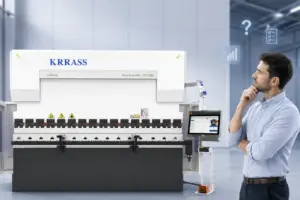
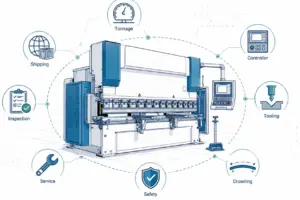
Le presse plieuse est l'une des machines les plus importantes de Fabrication métallique, permettant aux fabricants de plier et de façonner la tôle avec précision et régularité. À mesure que la technologie évolue, les entreprises sont confrontées à une décision cruciale : doivent-elles investir dans une presse plieuse hydraulique ou un Presse plieuse électrique?
Chaque modèle présente des avantages et des inconvénients, et le choix dépend souvent du coût, des performances requises et des applications spécifiques. Ce guide détaillera les différences et vous aidera à faire le bon choix pour votre atelier de fabrication.
👉 Apprenez-en davantage sur KRRASS expertise de l'entreprise dans la conception de solutions innovantes machines de pliage CNC pour les industries modernes.
1. Comprendre les bases des presses plieuses
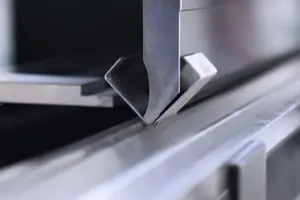
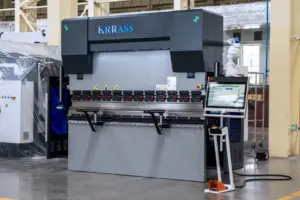
A machine de pliage CNC utilise des systèmes de contrôle avancés pour plier la tôle selon des angles précis. Les deux types les plus courants sont :
- Presse plieuse hydraulique – Utilise des vérins hydrauliques pour appliquer la pression.
- Presse plieuse électrique – Utilise des servomoteurs électriques pour l'action de flexion.
Ces deux machines sont largement utilisées dans Fabrication métallique, mais leurs performances diffèrent sensiblement.
👉 Explorez KRRASS portefeuille de presses plieuses pour les modèles avancés.
2. Presses plieuses hydrauliques vs. électriques : une comparaison côte à côte
| Fonctionnalité | Presse plieuse hydraulique | Presse plieuse électrique |
|---|---|---|
| Source d'alimentation | Vérins hydrauliques | moteurs servo-électriques |
| Précision | ±0,2 mm | ±0,05 mm |
| Vitesse | Modéré | Très rapide |
| efficacité énergétique | Consommation d'énergie plus élevée | 30–50% consommation d'énergie réduite |
| Entretien | Plus fréquent (huile, joints) | Inférieur (sans système hydraulique) |
| coût initial | Inférieur | Plus haut |
| Applications | Matériaux épais et résistants | Matériaux plus fins et de haute précision |
(Source: Le fabricant)
3. Avantages des presses plieuses hydrauliques
3.1 Puissance élevée pour les travaux intensifs
Les systèmes hydrauliques délivrent une pression immense, ce qui les rend idéaux pour Fabrication métallique de tôles épaisses et d'alliages à haute résistance.
3.2 Investissement initial réduit
Les modèles hydrauliques coûtent généralement moins cher à l'achat, ce qui les rend attrayants pour les petits et moyens fabricants.
3.3 Fiabilité éprouvée
Utilisée depuis des décennies dans l'industrie, presse plieuse hydraulique est reconnue pour sa durabilité et sa polyvalence.
4. Avantages des presses plieuses électriques
4.1 Haute précision
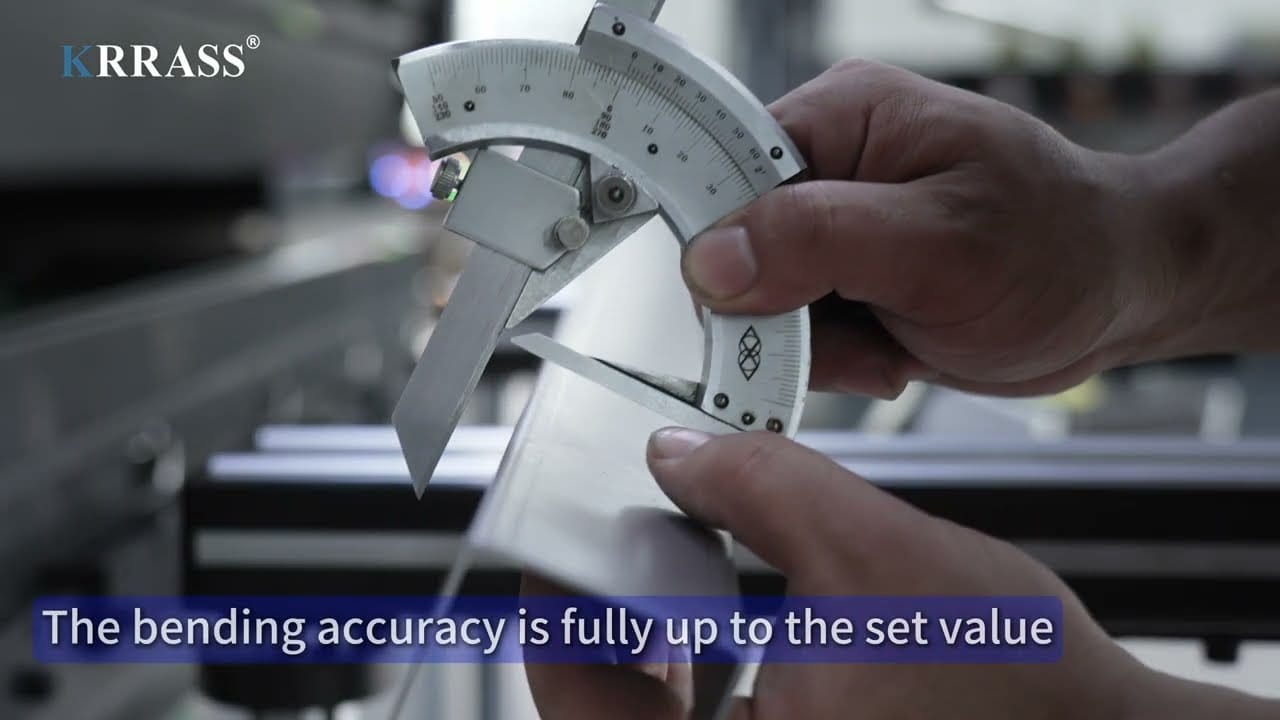
Les modèles électriques offrent une précision exceptionnelle, ce qui les rend idéaux pour des secteurs comme l'aérospatiale, l'automobile et l'électronique où les tolérances sont strictes.
4.2 Efficacité énergétique
presses plieuses électriques consommer moins d'énergie, support fabrication durable et en réduisant les coûts opérationnels.
4.3 Entretien réduit
L'absence de fluides hydrauliques et de joints d'étanchéité signifie moins de pannes et une réduction des temps d'arrêt.
4.4 Installation et fonctionnement plus rapides
Les systèmes à servocommande permettent des transitions rapides entre les tâches, améliorant ainsi la productivité dans la production à grand volume.
5. Quand choisir un système hydraulique ou électrique ?
- Choisissez une presse plieuse hydraulique si :
- Votre processus matériaux plus épais (≥10 mm)
- Vous avez besoin d'une solution moins coûteuse
- La robustesse à toute épreuve est plus importante que la vitesse.
- Choisissez une presse plieuse électrique si :
- Vous avez besoin machines de pliage CNC de haute précision
- Le développement durable et l'efficacité énergétique sont des priorités
- La production implique des matériaux plus fins ou des formes complexes
👉 Besoin d'aide pour vous décider ? Contactez les experts de KRRASS pour des recommandations personnalisées.
6. Considérations de sécurité relatives à la presse plieuse
Qu'elle soit hydraulique ou électrique, machines de pliage CNC doit respecter des règles strictes protection de l'opérateur normes :
- Utilisation de rideaux lumineux et de dispositifs de sécurité
- entretien et inspections réguliers
- Formation complète des opérateurs
(Référence: Normes de protection des machines de l'OSHA)
7. L'avenir de l'innovation dans le domaine des presses plieuses
2025 et les années suivantes verront davantage de choses. presses plieuses hybrides, alliant la puissance de l'hydraulique à l'efficacité des systèmes servo-électriques. Les contrôleurs CNC intelligents et l'intégration de l'IoT permettront d'améliorer encore :
- Maintenance prédictive
- Surveillance en temps réel
- Automatisation avec des bras robotisés
Ces innovations définiront l'avenir de Fabrication métallique.
8. Étude de cas : Transition de l'hydraulique à l'électrique
Un équipementier automobile de taille moyenne a remplacé trois presses plieuses hydrauliques par deux presses plieuses électriques. Au bout d'un an, ils ont rapporté :
- 25% réduction des coûts énergétiques
- 30% cycles de production plus rapides
- Précision de pliage améliorée pour les panneaux de carrosserie
- Temps d'arrêt pour maintenance réduit
Cela démontre comment les presses plieuses électriques peuvent améliorer à la fois la durabilité et la productivité.
Conclusion
Choisir entre un presse plieuse hydraulique et un Presse plieuse électrique Cela dépend de vos objectifs commerciaux, de vos besoins matériels et de votre stratégie à long terme.
Modèles hydrauliques offrir puissance et accessibilité pour les tâches exigeantes, tandis que modèles électriques Offrir précision, rapidité et durabilité. Pour de nombreux fabricants, le choix idéal peut même consister en une combinaison des deux.
👉 En savoir plus sur Histoire et expertise de KRRASS
👉 Découvrez notre gamme complète de presses plieuses
👉 Vous avez des questions ? Contactez-nous dès aujourd'hui
En pesant soigneusement le pour et le contre, vous pouvez choisir machine de pliage CNC qui garantit l'efficacité, la sécurité et la rentabilité dans le monde concurrentiel de Fabrication métallique.