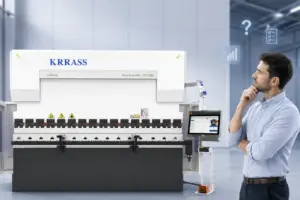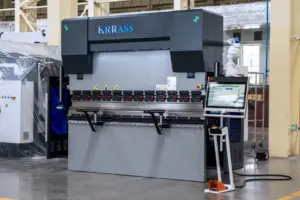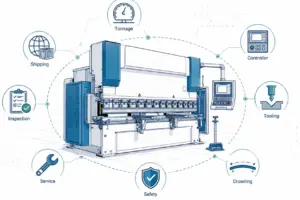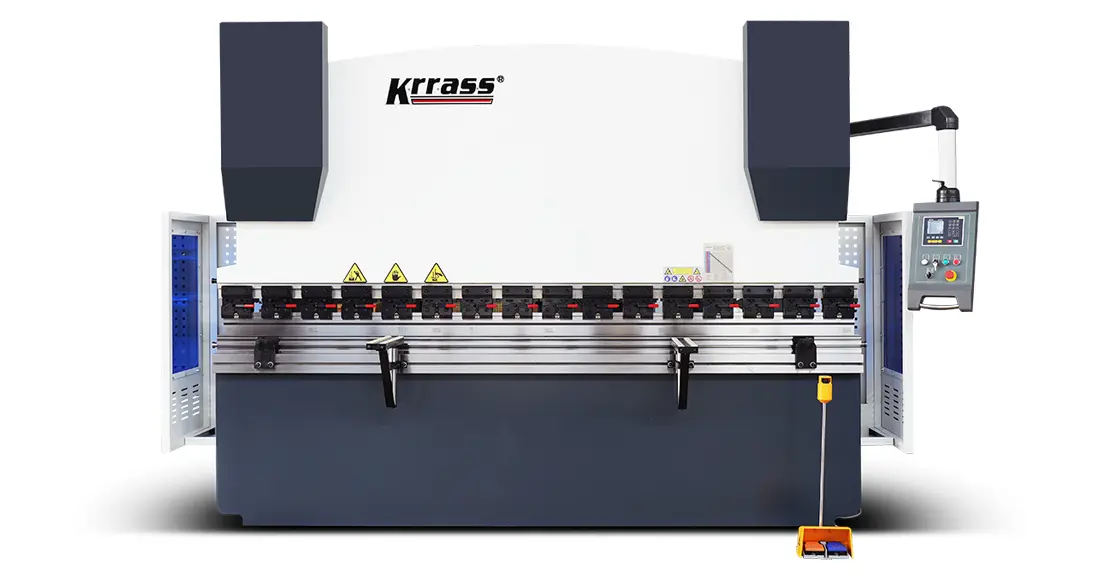
presses plieuses are essential machines to have in your workshops. What sets these machines apart is their durability and versatility. They possess unique capabilities for forming and bending sheet metals, even handling small pieces effectively. One well-known machine in this category is the press brake.
What are Press brakes?
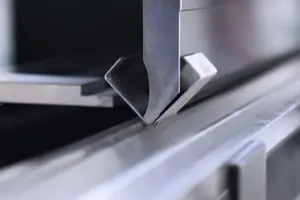
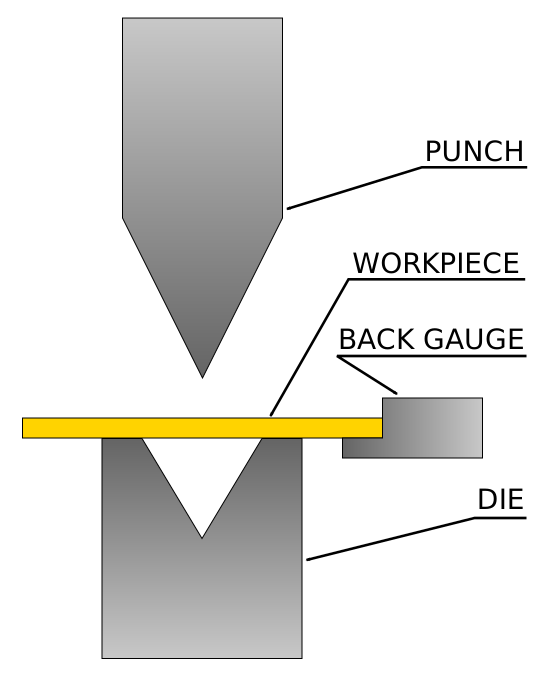
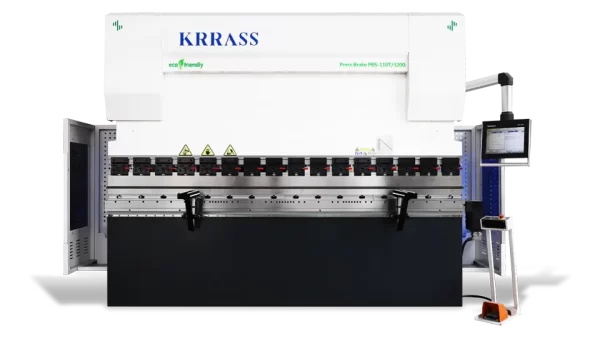
A press brake is a specialized machine used for bending sheet metal. Its capabilities are determined by two factors: overall bending length and metal bending capacity. presses plieuses are designed to be narrow and long, allowing for easy bending of sheet metal of any size. The process involves lowering a punch onto the sheet metal positioned over a die, repeatedly bending it until the desired shape is achieved.

Face à la diversité des presses plieuses disponibles sur le marché, choisir celle qui correspond le mieux à vos besoins peut s'avérer complexe. Mais rassurez-vous, KRRASS est là pour vous accompagner !
Demander à être rappelé
Découvrez nos produits
How do Press Brakes work?
Press brakes consist of several essential parts:
- Punch: The tool that bends the workpieces by "punching" them into the die.
- Pièce à usiner : The surface on which the material is placed and the bend is applied.
- Mourir: The tool that enables the workpiece to bend.
Types de presses plieuses
Bending sheet metal requires significant force, and different methods are employed to generate and apply this force. Modern machines are more efficient than older ones and require less effort.
The main types of press brakes based on their operations are as follows:
Presses plieuses mécaniques
These are the most common type of press brakes. They are powered by an internal motor that drives a large flywheel at high speed. The operator controls the flywheel through a clutch. Mechanical press brakes have simpler electronics, making maintenance and operation easier. They can handle loads up to three times their intrinsic rating. However, one drawback is that the ram must complete a full cycle once engaged, which could potentially lead to the press brake becoming locked if there is excessive ram travel.
Presses plieuses hydrauliques
Hydraulic press brakes utilize hydraulic pressure to push the ram down instead of relying on mechanical means. They can have multiple cylinders, providing the operator with greater control over the bending process. This results in highly customizable and precise bends. presses plieuses hydrauliques, however, cannot exceed their rated tonnage. If flexibility is required for a project, mechanical press brakes are a better choice.
Presses plieuses CNC
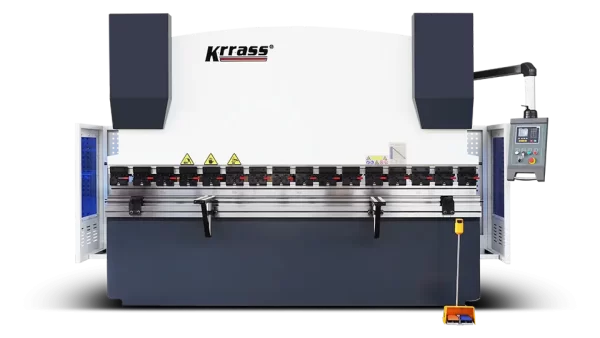
CNC (Computer Numerical Control) press brakes offer high customization and precision. They utilize computer technology to enhance efficiency and control accuracy. A trained operator can input data such as bending angle, plate thickness, and width into a controller, which then governs the brake's operation.
Applications of Press Brakes
- industrie automobile
- industrie aérospatiale
- Furniture manufacturing
- Marine engineering
- Metal artwork
- Metal container production
- Various other sheet metal applications
Avantages des presses plieuses
1. Increased Flexibility
Unlike other machines, presses plieuses are capable of bending small parts as well as larger amounts of metal. They are suitable for sheet metals of any size.
2. Reduction of Material Waste
presses plieuses offer high precision and accuracy, resulting in less waste of materials compared to other equipment used in manufacturing.
3. Cost-effectiveness
The dies used in press brakes are relatively inexpensive, and they have a long service life.
4. Ability to Perform Both "S" and "U" Bends
Press brakes can handle the more complex task of stamping "U" moldings, in addition to performing "S" bends. This versatility is facilitated by the presse plieuse.
5. Prototyping Capabilities
One significant advantage of press brakes is their ease of setup and tooling. This enables quick switching between different applications, simplifying the process of prototyping and shaping applications.
Demander à être rappelé
Découvrez nos produits
Visitez notre chaîne YouTube
Quelle presse plieuse vous convient le mieux ?
Si vous avez des questions ou souhaitez discuter de votre Presse plieuse Pour connaître les exigences spécifiques à votre entreprise, veuillez nous contacter dès aujourd'hui au 0086 18952087956 ou en utilisant notre formulaire de contact en ligne.
In conclusion, press brakes are essential machines in the sheet metal industry for bending metals into various shapes and sizes. Their significance is comparable to power press machines and shearing machines in this industry.