
Introducción
In the evolving world of fabricación de metal, the choice of cutting technology can determine a factory’s efficiency, quality, and competitiveness. For decades, corte por plasma y Reducción de CO2 dominated the industry. However, with the advancement of máquinas de corte por láser de fibra, manufacturers are rethinking their strategies.
So which one is right for your business? This article compares máquinas de corte por láser de fibra, Reducción de CO2, y corte por plasma to help you make an informed decision.
1. What Is Fiber Laser Cutting?
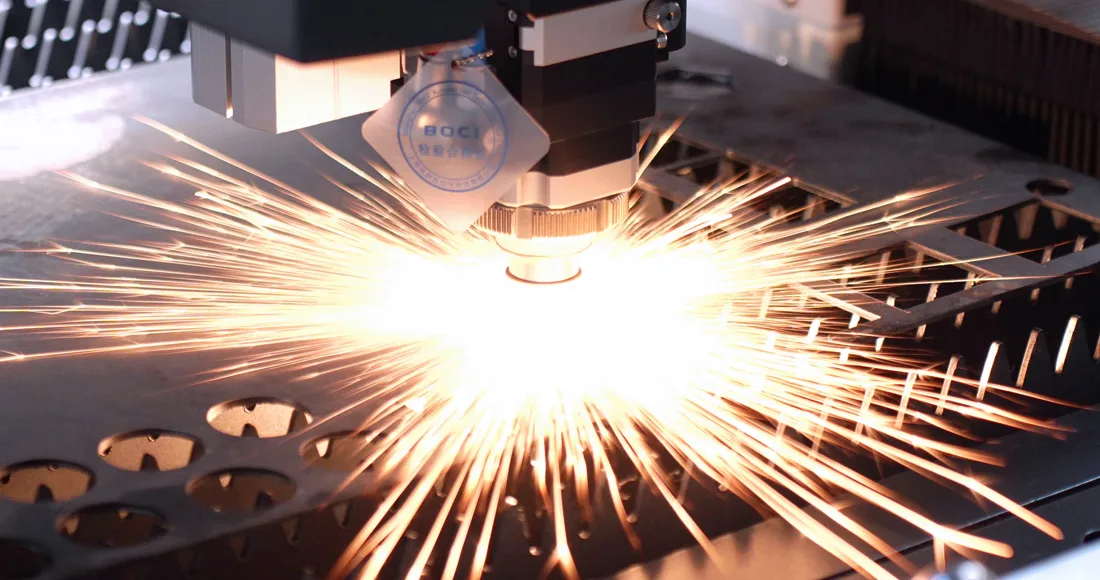
A máquina de corte por láser de fibra uses optical fiber to deliver high-power laser beams, achieving ultra-precise cuts with minimal heat distortion. Unlike traditional methods, it is faster, more accurate, and capable of cutting complex geometries in sheet metal.
👉 Conozca más sobre KRRASS experiencia de la empresa in delivering advanced sheet metal solutions.
2. Traditional Cutting Technologies
Before fiber laser systems, corte por plasma y CO2 laser cutting were the standard choices.
- Corte por plasma: Uses electrically conductive gas to melt materials. Suitable for thick sheets but less precise.
- Reducción de CO2: Uses a gas laser, offering smoother edges than plasma but requiring higher maintenance.
3. Fiber Laser vs. Plasma vs. CO2 Cutting
Here’s a detailed comparison table:
| Característica | Corte por láser de fibra | CO2 Cutting | Corte por plasma |
|---|---|---|---|
| Exactitud | ±0.05 mm | ±0.1 mm | ±0.3 mm |
| Velocidad de corte | Muy alto | Moderado | Alto |
| Material Range | Metals, alloys, reflective materials | Metals, non-metals | Thick metals only |
| Mantenimiento | Bajo | High (mirrors, gas tubes) | Moderado |
| Eficiencia energética | Muy alto | Medio | Medio |
| Costo de operación | Lower (energy savings) | Higher | Lower equipment cost but high consumables |
(Fuente: El Instituto de Soldadura)
4. Key Advantages of Fiber Laser Cutting Machines
4.1 Superior Precision
Fiber lasers achieve exceptional laser technology accuracy, making them ideal for industries requiring tight tolerances.
4.2 Energy Efficiency
They consume less electricity than Reducción de CO2 y corte por plasma, lowering long-term costs.
4.3 Low Maintenance
No mirrors or gas tubes means reduced upkeep and downtime.
4.4 Flexibility
Fiber lasers cut reflective materials like copper and brass, which are challenging for CO2 lasers.
5. When to Choose Plasma or CO2 Cutting
Despite the benefits of fiber lasers, corte por plasma y Reducción de CO2 still have niches:
- Plasma remains cost-effective for very thick steel.
- CO2 cutting works well for non-metallic materials (e.g., wood, glass, plastic).
6. Fiber Laser Cutting in Metal Fabrication
Fiber laser cutting is now widely adopted in industries such as:
- Automotor: producing body panels with high consistency.
- Aeroespacial: manufacturing lightweight but strong components.
- Construcción: delivering customized designs for architectural panels.
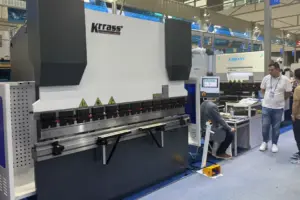
👉 Explore advanced bending solutions with KRRASS CNC press brakes, which often complement laser cutting lines.
7. Consideraciones de costos
Although fiber laser machines require a higher initial investment, they provide better ROI due to:
- Faster cutting cycles
- Reduced material waste
- Energy savings
- Longer machine life
8. Safety and Environmental Impact
Fiber laser cutting produces fewer emissions and is safer compared to plasma cutting, which releases fumes. This aligns with fabricación ecológica goals and global sustainability standards (Asociación Mundial del Acero).
9. Industry 4.0 and the Future of Cutting
Moderno máquinas de corte por láser de fibra integrate with automation, IoT, and AI-based monitoring systems. They form the backbone of smart factories where every cut is tracked, optimized, and repeatable.
(Reference: Wikipedia on Laser Cutting)
Conclusión
When comparing máquinas de corte por láser de fibra, Reducción de CO2, y corte por plasma, the choice depends on your priorities:
- Choose máquinas de corte por láser de fibra for precision, energy efficiency, and versatility.
- Stick with corte por plasma for thick, low-cost steel work.
- Opt for Reducción de CO2 if you need to process non-metals alongside metals.
For most modern factories, the fiber laser is the best long-term investment, offering unmatched performance in sheet metal fabrication.
👉 Learn more about KRRASS’s innovative solutions
👉 Browse our range of prensas plegadoras
👉 Have questions? Contact our experts
By adopting fiber laser technology, manufacturers not only improve production but also future-proof their operations in an increasingly competitive market.
 English
 Portuguese
 Spanish